

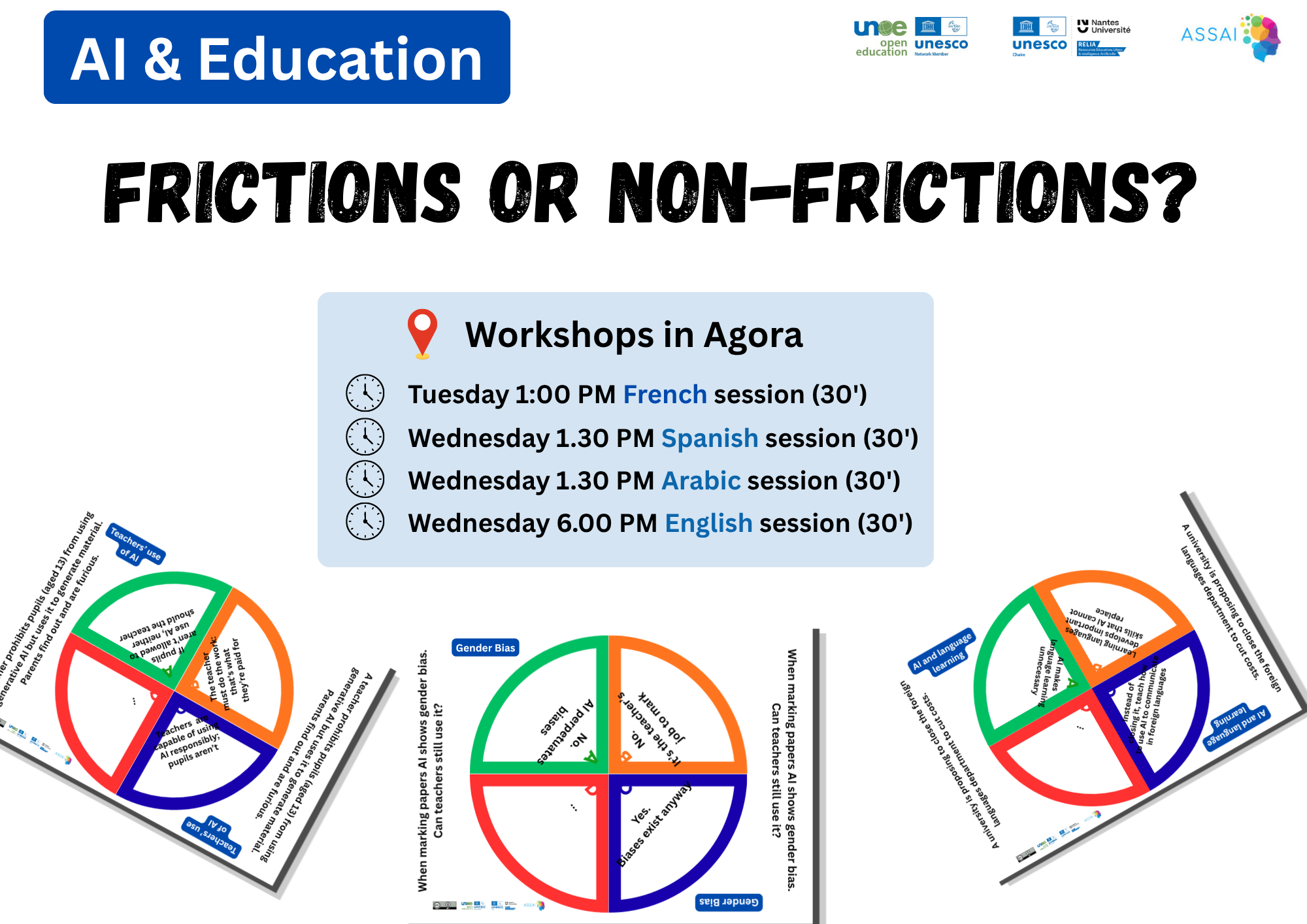
During Digital Learning Week at UNESCO from 8 to 11 September, the UNOE network had the opportunity to present its initiative: Frictions or Non-Frictions? This participatory workshop aims to encourage reflection on how teachers and pupils use AI – uses that give rise to all sorts of dilemmas, which we have termed ‘Frictions’ here, in line with this year’s conference theme:
Education in the Age of AI: Facts | Frictions | Frontiers
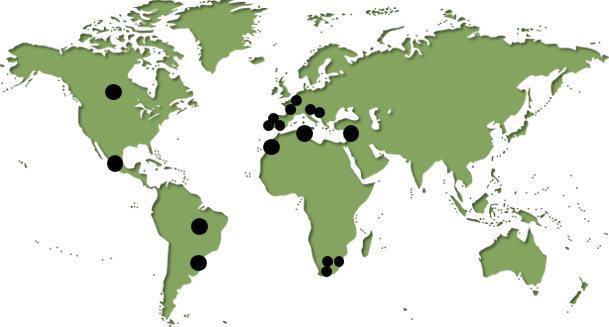
As an international network, we decided to offer our activity in French, Spanish, Arabic and English. Members of the UNOE network who were in Paris for the week therefore facilitated the activity in their own language, enabling participants to express themselves in their native language.
UNESCO allocated us a central, high-traffic space; this meant that many people were able to join us, regardless of their language.
The workshop: ‘Friction or Non-Friction?’
The activity revolved around display boards illustrating points of friction on current issues encountered in the field of AI, such as:
- Suspicions of AI use without evidence
- Teachers using AI whilst pupils are banned from doing so
- Inequalities in the use of AI – paid versus free options
- AI and language learning
- Gender bias, for example in the marking of exam papers
These topics are presented in the form of questions, and the activity invites participants to choose one of the three opinions or answers provided.
Very often, as with any dilemma, none of the proposed solutions is entirely satisfactory. Participants therefore tend to choose, somewhat by default, the one that most closely matches their own thinking.
This leads to a discussion – often a very lively one – in which participants argue for their choice of answer or seek to understand the reasoning behind others’ choices.
Finally, participants who wish to do so are asked to change their choice or to write a fourth answer that better reflects their opinion.
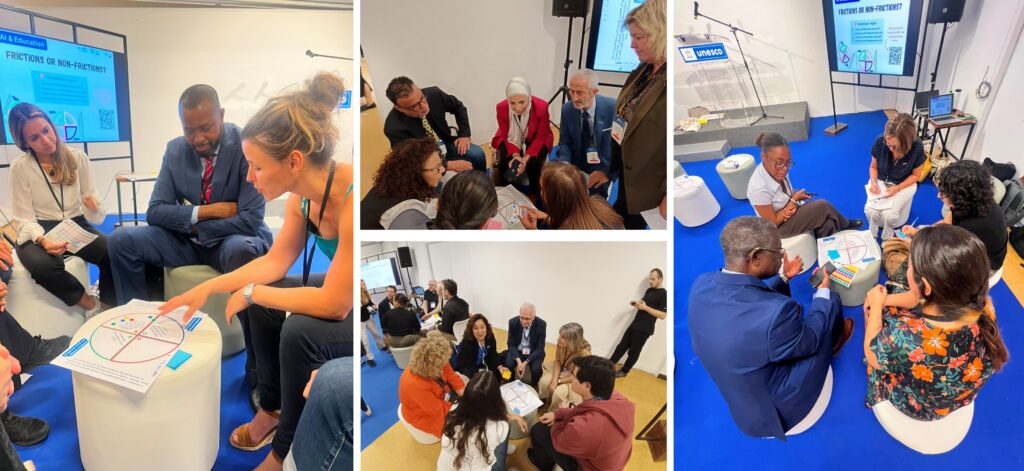
The four sessions were a success, featuring lively discussions and debates. As the workshop was held in an open space as part of Digital Learning Week, many people stopped by ‘in passing’ and got involved, further enriching the discussions. Some photos to follow.
Would you like to run this activity at your institution?
The resources are available under a CC licence and can be downloaded here:
Would you like to share your ideas or views on the different frictions presented?
You can take part in our online activity by answering this questionnaire.
Some photos of the activity
If you have any questions about this workshop, please contact the UNESCO RELIA Chair: chaireunescorelia@univ-nantes.fr