


A “Student Fellow” from the UNITWIN UNOE network, invited to Pope Leo XIV’s official visit to UNESCO in Paris.
Prune Sochard, a student at the University of Nantes and a member of the UNOE (Unitwin Network on Open Education) international Student Fellows programme, had already had an exceptional opportunity when she was invited to speak at the Ministerial Round Table as part of the UNESCO Forum on Youth in the Digital Age, held in early September in Paris.
On Friday 25 September, Prune was also among the fortunate few invited to take part in the official visit of His Holiness Pope Leo XIV to UNESCO headquarters in Paris, as well as in the round table discussion at the UNESCO Forum on Youth in the Age of AI – a universal reflection on Magnifica Humanitas.
“I am deeply moved and grateful to have had the opportunity to speak at UNESCO. I take away from this day a profound sense of hope for the future, fuelled by the richness of the discussions and speeches that characterised the event.”
Prune Sochard
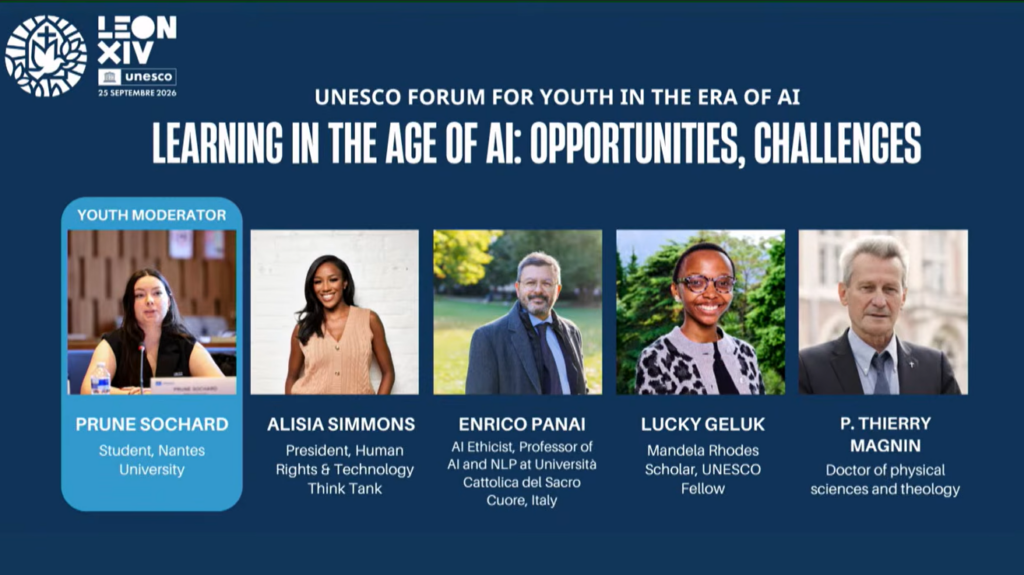
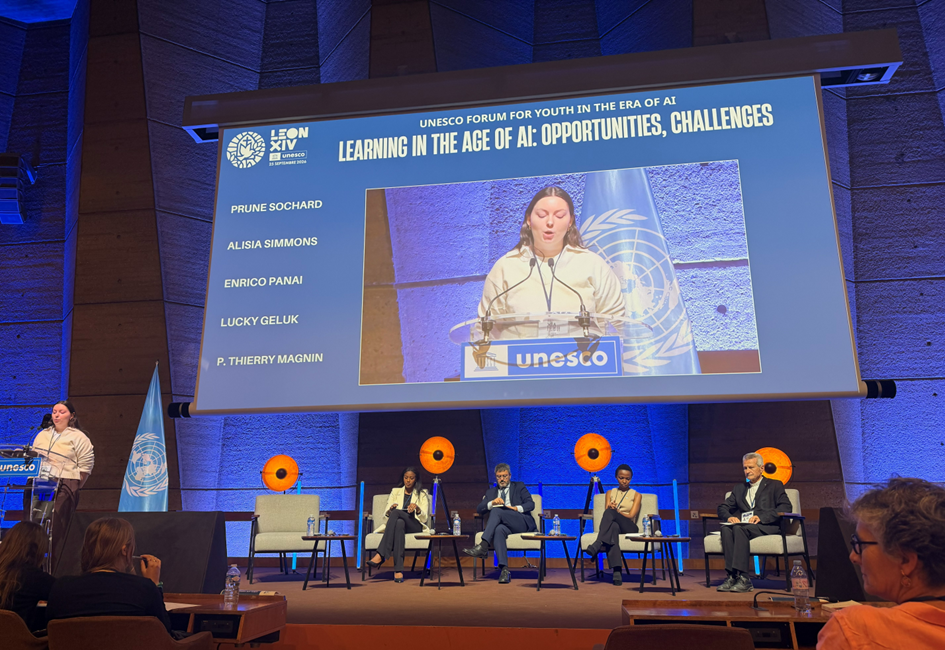
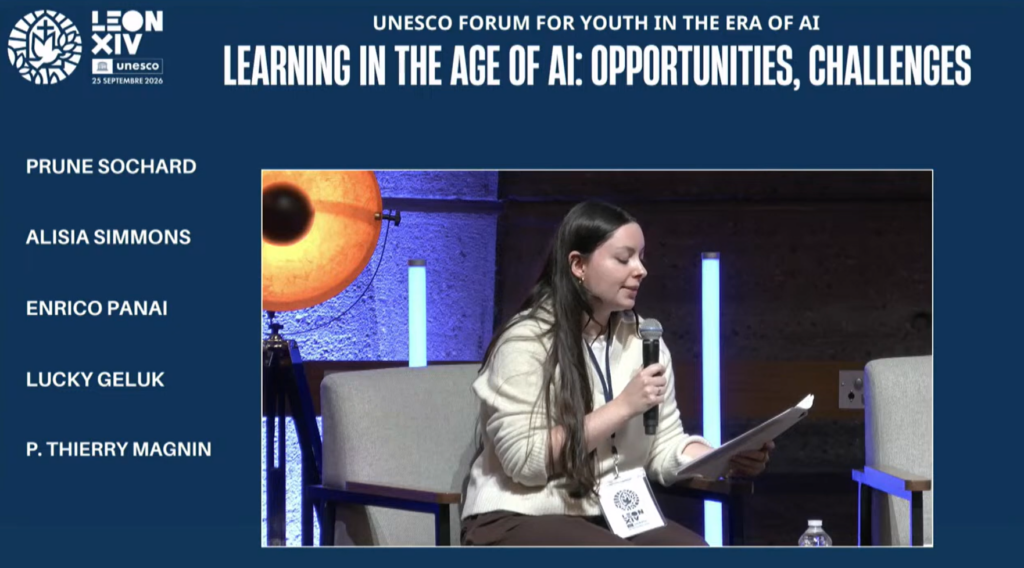
During the forum, Prune Sochard had the chance to present and chair the event’s first round-table discussion, entitled “Apprendre à l’ère de l’IA : opportunités et défis”.
During her speech, she was able to share the concerns as well as the hopes of the students from the UNOE network and the experts with whom she had interacted during the ministerial round table in early September. The round table she subsequently chaired explored the importance of putting safeguards in place regarding artificial intelligence in schools so that it remains a support rather than an obstacle to learning.
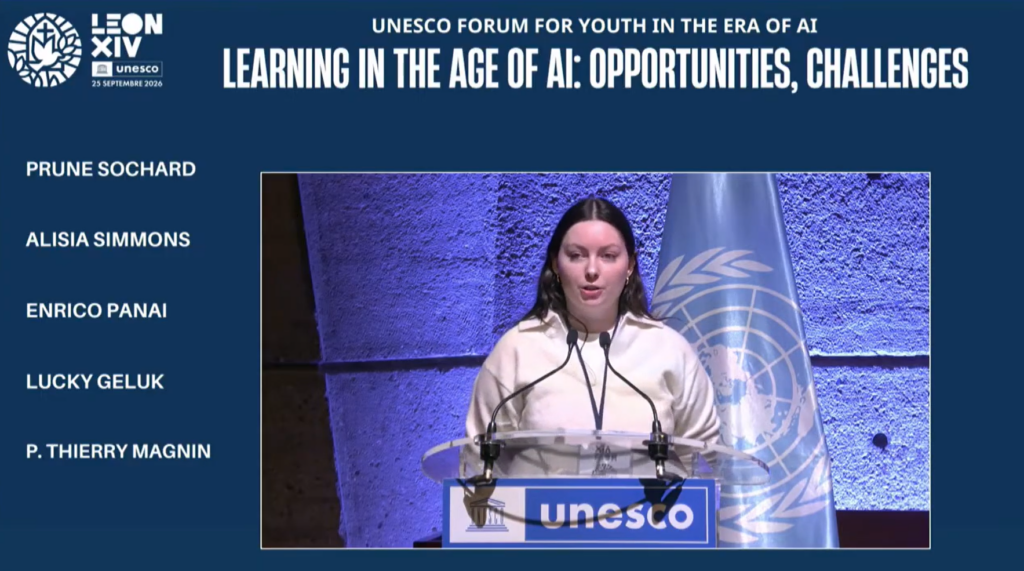
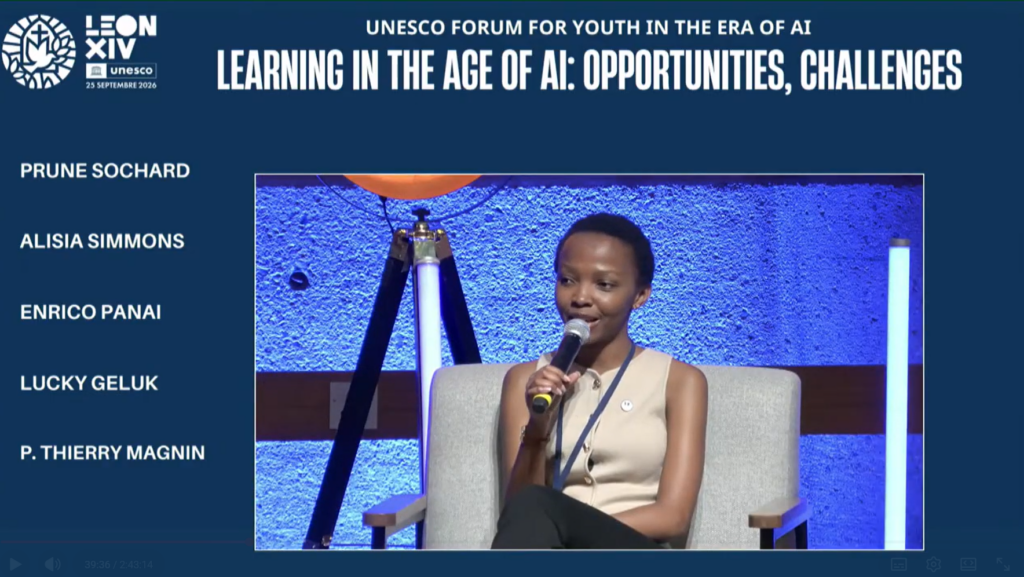
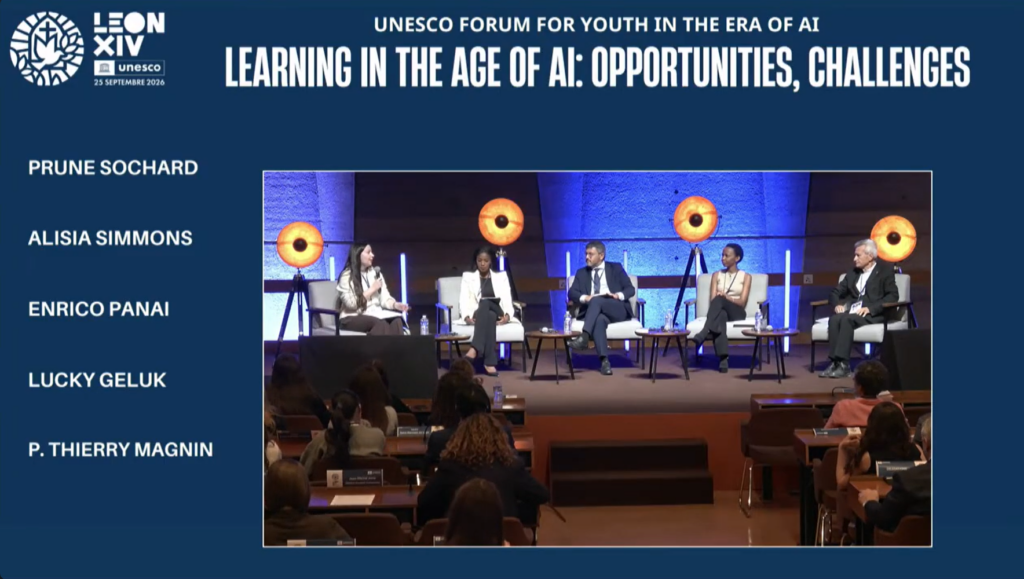
In the afternoon, the student from Nantes had the exceptional privilege of attending, in the midst of a packed and captivated audience, the official address by His Holiness Pope Leo XIV. This was a rare opportunity, the significance of which she fully appreciated, particularly as the Supreme Pontiff’s address resonated directly with the morning’s discussions, confirming and broadening reflections on the ethics of AI on a scale encompassing the whole of humanity.
Read Prune Sochard’s “Diary of an extraordinary day”
You can also watch Prune’s television interview on Télénantes (in French)
International recognition for a committed young person
The official invitation extended to Prune Sochard for the ceremony presided over by Pope Leo XIV at UNESCO marks the culmination of a journey of student engagement on an international scale. On this occasion, Prune Sochard represented the youth and student community of the UNOE network alongside another student from the same network: Lucky Geluk, from the University of Cape Town in South Africa.
A student from Nantes at the heart of discussions on education and AI
A student of Foreign Languages, Literatures and Civilisations (English) at the University of Nantes, Prune Sochard is training to become a teacher. Passionate about sharing knowledge and fostering critical thinking, she wrote a highly acclaimed ‘report of surprise’ as part of the UNOE project, entitled ‘Creating a sustainable culture of openness in universities’, in which she examines the role and future of learning in the face of new technologies.
The UNOE Student Fellows project: a unique global springboard
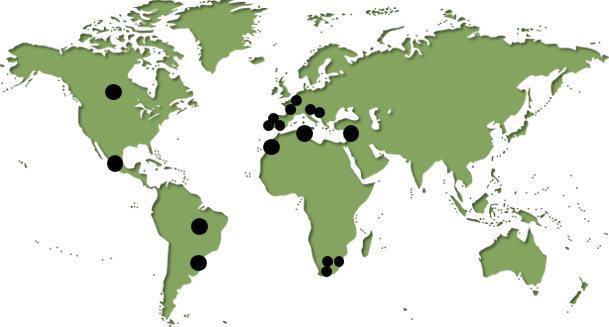
Supported by funding from the Hewlett Foundation, the UNOE network’s Student Fellows project – coordinated by the UNESCO RELIA Chair at the University of Nantes – brings together 26 students from 9 countries (South Africa, Brazil, France, Lebanon, Morocco, Mexico, Slovenia, Tunisia and Uruguay) who express themselves in seven languages.
This innovative programme offers students a scholarship and an international platform to make their voices heard on all topics relating to the future of education, such as the future of advanced technologies and artificial intelligence in higher education, and the role of Open Education and Open Educational Resources (OER) in ensuring equitable and inclusive access to knowledge
The invitation extended to several female students involved in the project to participate in the highest diplomatic and ministerial forums at UNESCO illustrates the strength of this network: positioning students not merely as beneficiaries of educational transformation, but as genuine co-creators and agents of change.

“
From Nantes to UNESCO. From UNESCO to a meeting with Pope Leo XIV
” de Solenn Gillouard et Prune Sochard is licensed under CC BY 4.0