


What happens when a professor tells students, “Never use generative AI”, but then uses ChatGPT to prepare their own teaching materials?
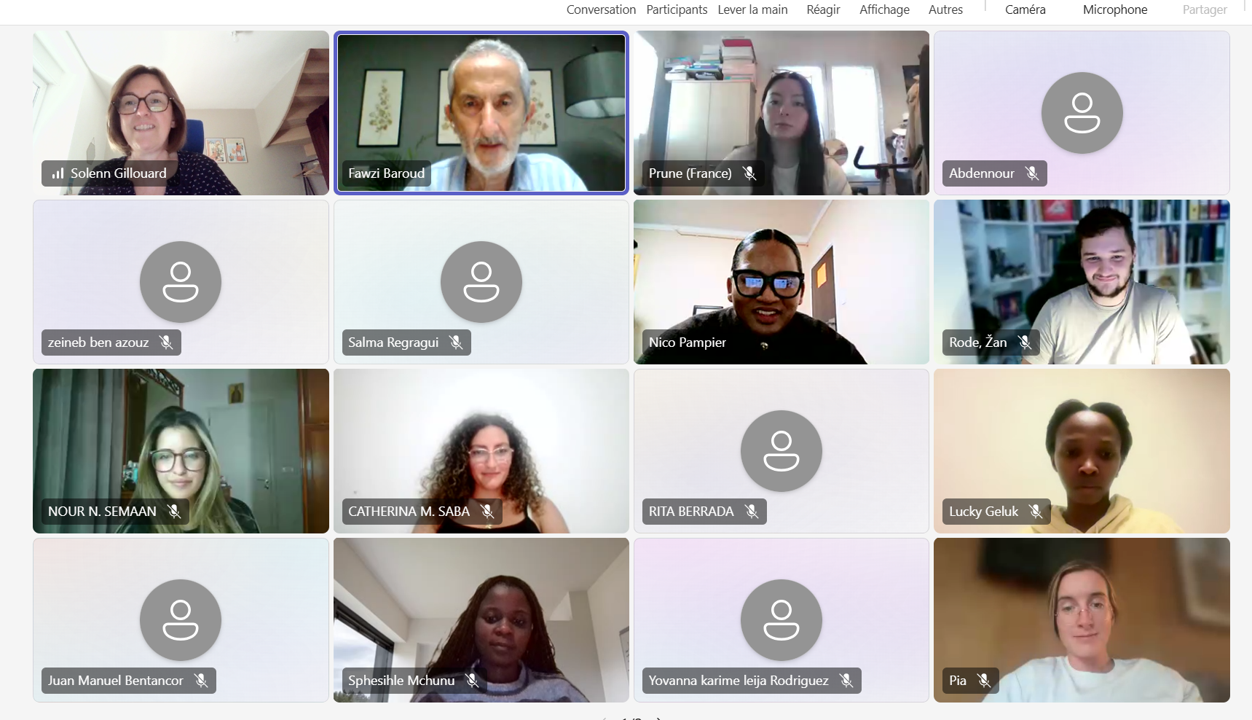
That was the question at the heart of a recent online workshop for 18 Student Fellows across the UNOE network. What followed was a lively, honest, and deeply constructive conversation about fairness, transparency, and the future of AI in education.
We invited our fellows to step into a real-world ethical dilemma. They voted, debated in breakout rooms, and reflected on their own positions. The results? They tell us a lot about where students stand and where institutions need to go next. Here is what we learned:
First Reactions: Confronting an Uncomfortable Contradiction
When we asked fellows for their immediate reaction to the professor’s action, the responses were swift and sharp.
- 44% said it was simply hypocritical.
- Another 28% said it depends on whether the professor was transparent, while 17% wanted more information before deciding. Only 11% were comfortable with the idea that teaching and assessment are different enough to justify the contradiction.
In other words: the instinctive response was one of unfairness. It felt wrong. But that was just the beginning.
From Instinct to Insight: Four Positions Emerge
After the initial poll, we presented fellows with four distinct positions, each representing a more reasoned take on the situation:
- A: The professor’s behavior raises a fairness issue. The same rule should apply to everyone.
- B: Teaching preparation is different from student assessment.
- C: Using AI is fine, but transparency is essential.
- D: The real problem is the blanket ban (total prohibition). Ethical use should be taught instead.
The shift was striking.
70% of fellows chose either C or D positions that move beyond judgment and toward solutions. Transparency and systemic reform mattered more than simply calling out the professor.
By the end of the breakout discussions, Position D had become the clear consensus, with 47% of participants agreeing that the real issue was the blanket ban itself.
The Breakout Effect: Dialogue Deepened Thinking
We asked fellows if their position changed during the small group discussions.
- 67% kept their original position, but many said they felt more certain after hearing others.
- 13% changed their position.
- Another 13% became more certain of their original view.
- One participant admitted they became less certain, a sign that the discussion had genuinely complicated their thinking.
This is exactly what we hoped for. The goal was not to “win” an argument, but to understand why thoughtful people might see the same situation differently.
What Should the Professor Do Now?
The most telling question came at the end: “What should the professor do now?”
- 40% said the professor should apologize and explain their use of AI.
- 33% recommended revising the course policy to allow limited, ethical AI use.
- Only 7% said the professor should stop using AI altogether.
- 0% said no action was necessary.
The message was clear: this is not about punishment. It is about repair, transparency, and building a better system.
What This Means for Education
The workshop revealed five important lessons:
1. AI use is a values-based issue
Disagreements often stem from different priorities: fairness, transparency, academic integrity, or trust. Recognizing this makes conversation more respectful and productive.
2. Transparency builds trust
The lack of openness, not the use of AI itself, was the real problem. Whether a student or an educator, disclosure matters.
3. Teaching and assessment may need different rules
There is a legitimate difference between preparing a lesson and grading a student’s work. However, that distinction must be clearly communicated to avoid perceptions of a double standard.
4. Blanket bans are not enough
Strict prohibitions may feel simple, but they do not prepare students for the real world. A more constructive approach is to teach ethical, limited, and transparent AI use.
5. AI policies should be co-created
Students, educators, and institutions must work together to develop policies that are practical, fair, and trusted. Student voices are not optional; they are essential.
Fellows Rated the Workshop Highly
We also asked participants to evaluate the workshop itself. The feedback was overwhelmingly positive:
- 93% rated it “Very Valuable” or “Valuable”
- 87% said the instructions were clear.
- 100% rated the facilitator as effective.
- Many said the workshop encouraged them to participate, reflect, and listen to different perspectives.
This tells us that the format anchored in a concrete case study, live polls, and structured discussion works. It creates space for honest dialogue without polarization.
Final Thoughts: A Call to Build, Not Ban
As one fellow put it: “The real problem is the blanket ban.”
That sentiment captures the spirit of the entire workshop. The question is no longer “Should we use AI?” It is “How can we use it responsibly, transparently, and fairly?”
For institutions, this means moving beyond rigid rules and towards shared principles, anchored in options C and D, involving students in the making, not as passive recipients of policy, but as active co-creators of it.