By Catherine Saba, Notre Dame Louaize University, Lebanon
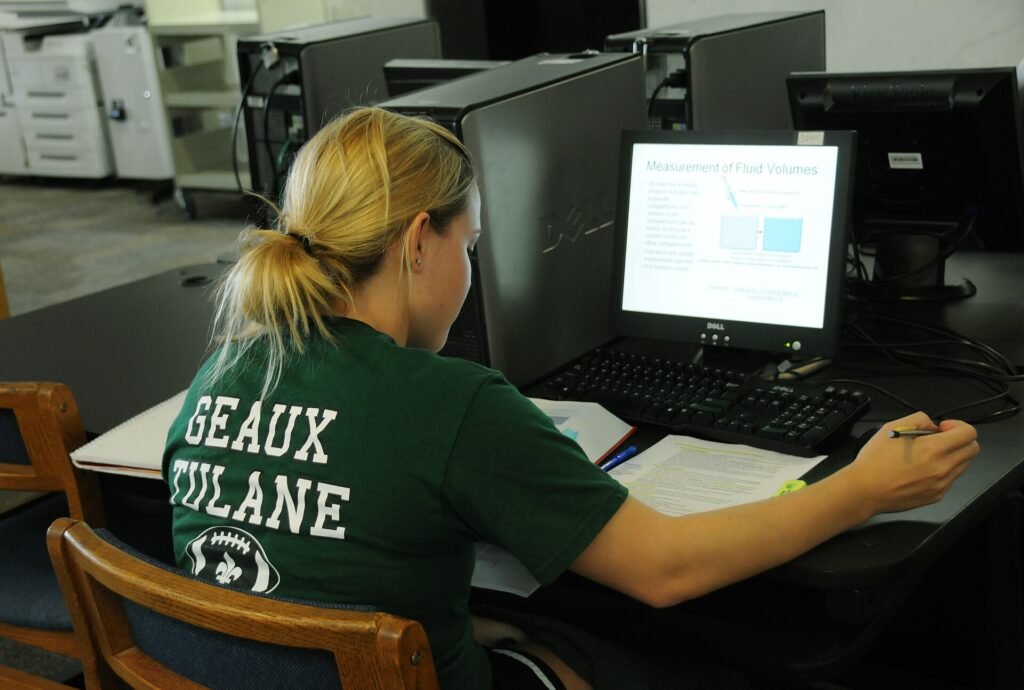
Source: https://commons.wikimedia.org
Studying engineering in Lebanon has taught me something strange: sometimes the hardest part of education is not understanding the material but simply accessing it.
This realization became even clearer to me during my journey as an OER fellow. In many universities around the world, students are encouraged to explore, experiment, and learn beyond the classroom. Yet for many students in my region, education often feels like a constant negotiation between ambition and limitation. That contradiction astonishes me.
What surprises me most is that we live in a world where knowledge has never been more available, yet access to it still feels unequal. A student can open their phone and theoretically reach millions of books, lectures, research papers, and tutorials. But in practice, many barriers still exist: expensive textbooks, unstable internet connections, limited institutional resources, language barriers, and teaching methods that sometimes prioritize memorization over curiosity.
As a Computer Communication Engineering student, I am surrounded by technology every day. We are constantly told that technology is transforming the future of education. But technology alone is not enough. A recorded lecture means little if students cannot access stable electricity. An online platform means little if learning materials remain locked behind paywalls.
I experienced this personally last semester while working on a project. I was researching a communication protocol and finally found a research paper that seemed to contain exactly the information I needed. Excited, I clicked “Read More,” only to face a paywall asking for $35 to access the article. For many students, that might seem manageable. But for a student in Lebanon living through an economic crisis, $35 is not a small inconvenience, it can be a real barrier. I remember staring at the screen feeling frustrated, knowing the knowledge existed, yet remained out of reach. In the end, I had to abandon the best resource simply because I could not afford it.
At the same time, I have also witnessed something deeply inspiring. I have seen students helping one another by sharing notes, recording explanations, translating difficult concepts, and uploading resources online simply because they do not want others to struggle alone. I have seen professors who genuinely care more about understanding than grades. I have seen communities built around openness and collaboration rather than competition.
That is why open education astonishes me in a positive way as well. It challenges the traditional idea that knowledge must always be restricted, expensive, or exclusive. Open educational resources create opportunities not only for academic success, but also for dignity. They send students a powerful message: you deserve to learn too.
As fellows, we often speak about innovation, accessibility, and inclusion. But for me, the most important question remains simple: if knowledge can be shared, why do so many people still struggle to reach it?
That question continues to astonish me. More importantly, it pushes me to act. Whether through sharing resources, advocating for open access, or supporting students around us, we all have a role to play in making education more accessible. Knowledge should not be a privilege reserved for a few; it should be something everyone has the opportunity to reach.

