By Pia Groleger, Academy of Fine Arts and Design in Ljubljana, Slovenia
Finding something that truly astonishes us these days, where we are constantly overflowing with new information and our attention spans are almost non-existent, can be a massive challenge.
Nevertheless, a while ago, I was reading a book by Julia Watson called Water (which features a profound focus on water systems), and a specific perspective about our planet shocked me immensely. It was a thought originally attributed to the sci-fi writer Arthur C. Clarke, and it goes like this:
“How inappropriate to call this planet Earth, when it is quite clearly Ocean.”
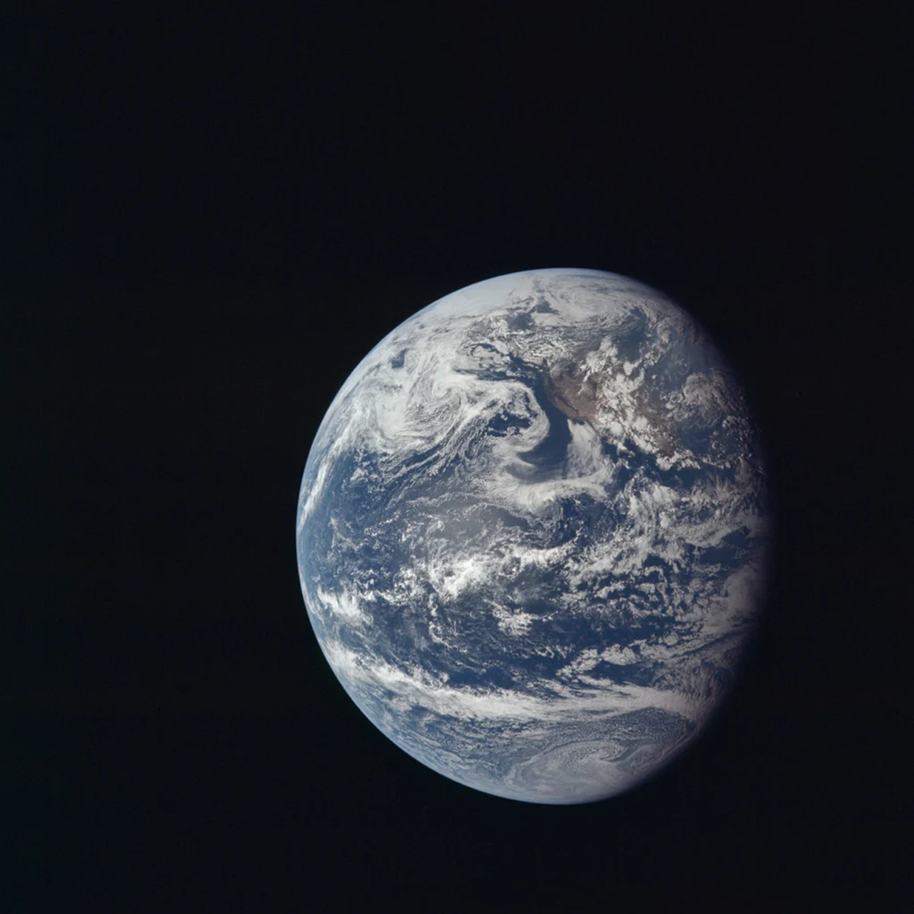
As children, we sit at our school desks and learn that the planet we live on is named “Earth.” It is a foundational fact, wrapped up in geography lessons, maps, and textbooks. Probably most of us never truly question it. It is just the way things are. But with this single quote, we are all of a sudden looking at the globe upside down. We start to question if “Earth” is truly the best name for our planet, or if we have simply been looking at our world through a deeply biased, land-dwelling lens, since roughly 71% of our planet’s surface is covered by ocean. This is what truly astonishes me when I think about the context of education.
Why do we teach facts as rigid, unyielding truths rather than invitations to wonder? For years, schools teach us what to call things, but they rarely teach us to question why we called them that in the first place. Imagine an education system that embraces this kind of constructive naivety. What if geography class started not with a map of borders, but with the question: “If an alien species arrived here today, what would they name our planet?” By allowing ourselves to be astonished by the everyday words we use, we open the door to a deeper kind of learning. We shift from memorizing data to generating critical responses to our environment. In an era of urgent ecological and social challenges, we don’t just need students who know the answers. We need students who are brave enough to look at a globe, look at their textbooks, and realize that sometimes the very framework we were given is worth questioning.
