Category: Sharing is a Challenge

  • Open Educational Resources Under Siege: The Risk of Losing “My Precious” out of Fear of Plunder

    Open Educational Resources Under Siege: The Risk of Losing “My Precious” out of Fear of Plunder

    Pierre-Antoine Gourraud is a professor of medicine at Nantes University and a hospital practitioner at Nantes University Hospital. He teaches cell biology, bioinformatics and public health and has been deploying open educational resources for 10 years. He is the founder of the Data Clinic at Nantes University Hospital, a department dedicated to the reuse of health data for research and evaluation purposes. At CR2TI, he conducts research into the genetics of multiple sclerosis and transplantation, and develops medical decision support tools.

    When I share an Open Educational Resource, a storm of doubts arises within me.  

    Do you know those voices? Those acidic whispers, those persistent echoes that hiss as soon as we dare to go open? We have already shared some of them. But this one, the toughest, the most vicious, whispers in my ear like an ill wind: “You’re going to get robbed. People are going to steal from you. Others will take advantage without giving anything in return.” “What if, in the end, you lose everything?” Like Gollum in The Lord of the Rings, who hears nothing but “my precious” as he is consumed by the illusion of the ring’s power.

    Gage Skidmore CC BY-SA. Flickr

    And yet. My conviction is rock solid. 

    A certainty forged in the public service of knowledge: commitment, in research, in those hours spent shaping knowledge with and for students. Creating Open Educational Resources means taking a step aside. It means leaving the ivory tower and entering, without a safety net, into the knowledge society. It means accepting to let go, to come out of the woods — for better or for worse. And let’s be clear, this is a career where we suffer from a lack of recognition — we know what we sow in generations of students, we rarely know what is reaped; and we often act alone without institutional support. 

    But then, who are we to talk about plundering?

    Who are we, who have grown up on the shoulders of giants, who have drunk from the fountain of knowledge freely offered by others? Those teachers, those researchers, those unknown people who, one day, uttered a word, shared an image, offered a perspective — and changed our intellectual trajectory. The plunderer who thought he was being plundered is caught! If we are all plunderers of knowledge, if we are aware of it and acknowledge it, the problem disappears. 

    The metaphor that comes to mind is simple, almost childish, but it hits home like a bolt of lightning: we are the spoilt children of a patrimonial view of knowledge. We believe that it behaves like a baguette — if you give away a piece, you have less. Except that’s not the case. Knowledge is the opposite of a baguette: the more you share it, the more it grows, the more it nourishes. It does not run out. It multiplies. Amen. 

    Baguette de pain. Pixabay. Creative Commons CC0 1.0 Universal Public Domain Dedication.

    I give you an Open Educational Resource? → You get richer. → I get richer too — through your feedback, your criticism, your improvements. → We move forward. A virtuous economy. A circle that never closes, that escapes us.

    The real danger? It’s not looting. It’s waste.

    That stupid fear that drives us to lock up, hoard, and keep under lock and key what is, by nature, meant to circulate. Knowledge doesn’t wear out if you use it. It improves when it circulates. Anything that isn’t given away is lost. Anything that isn’t shared is a missed opportunity — for you, for me, for the world and for the future.

    So yes, there is a risk in sharing.

    The risk of being copied, misused, misunderstood, and unrecognised. But the greatest risk of all? Wouldn’t that be to never dare? To remain hidden in the shadows, clutching knowledge that could help others grow.

    This article is part of the series “Sharing is a challenge”, published throughout March 2026, in collaboration with the UNESCO RELIA Chair and theEuniwell Network.

    Newsletter: To receive the upcoming articles from this series by mail, subscribe to our newsletter.

    Translation: This article has been written in French. This translation, produced using automatic tools and then proofread by our team, may contain inaccuracies. Please report any errors to us.
    About the illustration

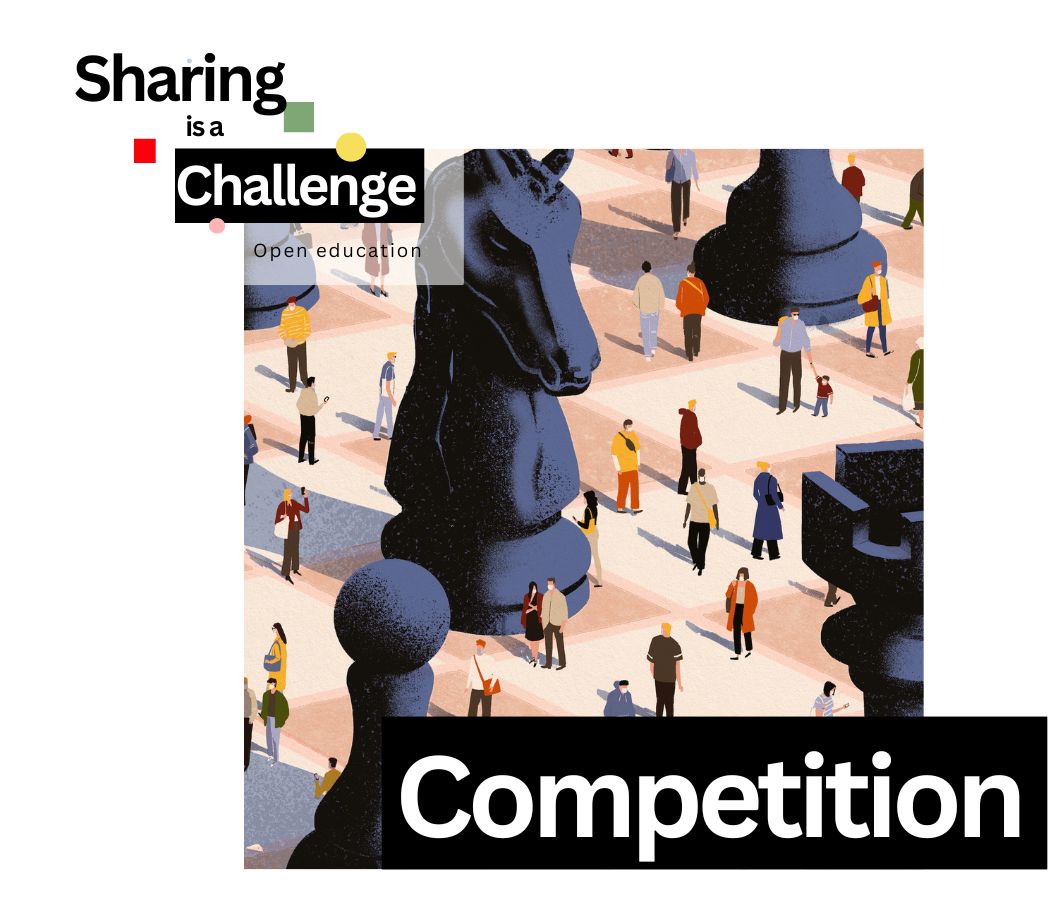
    The original artistic intention remains that of the artist and can be different from the editorial intention of our remix. We thank Hust Wilson for sharing his work under an open license CC BY-NC-SA 4.0.
    Open Educational Resources Under Siege: The Risk of Losing “My Precious” out of Fear of Plunder

    ” de Pierre-Antoine Gourraud est sous licence CC BY 4.0

  • Do we still need OER in the age of AI?

    Do we still need OER in the age of AI?

    Fawzi Baroud, Associate Professor and UNESCO Chair in OER at Notre Dame University–Louaize, draws on more than three decades of experience in higher education IT to drive digital transformation initiatives. His work promotes openness and responsible innovation, with a strong focus on leveraging ICT and OER to expand educational access and advance equity.

    Mitja Jermol is a Slovenian computer scientist and AI researcher, leading international initiatives on open education, knowledge technologies, and policy. He serves as a UNESCO Chair, shaping global discussions on artificial intelligence, ethics, and digital transformation across academia and industry.

    Generative artificial intelligence (GenAI) is reshaping almost every established practice in education. Some argue that Open Educational Resources (OERs) are among the main casualties. GenAI can produce learning materials instantaneously and on demand, so what is the purpose of painstaking work of creating, curating, and sharing OERs? Why should anyone invest in commons based repositories when a simple prompt can result in comparable results in seconds?

    OERs are mistakenly perceived as the content, something that could be easily synthesized by a language model. In reality OERs are designed learning experiences. They embody pedagogical intent to create learning experiences, include step-by-step process of understanding, involve activities that engage learners at various levels, provide feedback with assessments aligned with learning objectives and support inclusion through accessibility. All this human knowhow cannot (yet) be captured in a prompt even if it is complex and properly structured.

    Beyond pedagogy, OERs also provide provenance and accountability, something GenAI struggles to. OERs allow tracing origins, which is essential for the educational context, where knowing where knowledge comes from is important not just to maintain academic integrity but also to allow others to build upon prior work. 

    We should therefore look at the relationship between OERs and GenAI as a mutual enhancement, not a replacement. OERs provide transparent provenance, open licensing, and pedagogically designed learning experiences, while GenAI accelerates updating, translating, adapting and providing accessibility making OERs easier to maintain and more responsive without sacrificing quality or integrity.

    In summary, this mutual enhancement can be viewed through specific dimensions:

    • The training data paradox. GenAI are trained on human created content like OERs and if these are not there anymore, AI will be further trained on GenAI generated data that will lower the quality over time. 
    • Content against learning design. OERs are not just content;they include complex pedagogical architectures rooted in the centuries of expertise.
    • Verification and trust. GenAI results lack origins. OERs carry attribution, can be peer-reviewed and follows scholarly traditions of verification.
    • Contextualization and localization. In contrast to GenAI content that tends to be generic, OERs are able to capture specific linguistic and cultural contexts by communities that understand local needs.
    • The commons. OERs represent education as a shared human undertaking. On demand generation by GenAI moves education away from maintaining knowledge as a common good.
    • And finally, the equity dimension. OERs are downloadable, accessible offline, and can be used without commercial APIs or subscriptions. How much this matters, however, depends entirely on the following:

    OER and AI: A Global Question, Very Local Answers

    The answer to the question about “Do we still need OER in the age of AI” depends a lot on where you are.

    To illustrate this, we will look at two quite different contexts:

    • Lebanon, where economic hardship and unequal access to technology make OER essential for fairness and survival.
    • Slovenia, where strong digital infrastructure and European education policies shape how OER and AI are used in higher education.

    By exploring these two cases side by side, we argue that the future of education is not about choosing OER or GenAI, but about understanding how they can work together in different realities.

    The Lebanese Context

    Lately, a bold idea keeps popping up in education discussions:
    Why bother with OER when AI can generate content instantly?”

    On the surface, it sounds reasonable. With one prompt, AI can produce a lecture outline, a case study, or a quiz in seconds. So why spend time creating and sharing open resources?

    Yet the practical limits of instant content become visible as soon as access, affordability, and language enter the picture. In Lebanon, this distinction really matters. Universities and schools deal with financial crises, limited budgets, and unequal access to technology. Not every student has a powerful device or access to paid AI tools. OER provides something crucial: free, reusable learning materials that can be translated into Arabic or French and adapted to real classroom needs.

    Simultaneously, OER is not only a technical solution but also a social one, especially when users and institutions are under strain. OER also creates a sense of shared strength. When educators openly share resources, they support one another. Knowledge stays accessible, even when systems are fragile, and funding is uncertain. AI can absolutely help—by translating, updating, or personalizing OER—but it cannot replace the human values behind open education.

    In Lebanon, OER remains a foundation for fair and sustainable education. The future isn’t about replacing OER with AI, but about using them together: OER plus AI.

    Transition to the Slovenian Context

    Lebanon shows how OER can be a lifeline during crisis and limited access. Slovenia, however, presents a quite different picture. With strong digital infrastructure and support from European education policies, the focus is less on access and more on questions of innovation, academic integrity, and long-term sustainability.

    Since Slovenia offers universal internet connectivity and strategically supports educational institutions with investments, the general barriers to adopting innovative technologies and/or practices like GenAI are lower. The main challenge Slovenian educational system faces is not whether students and teachers will be using GenAI but how. This brings opportunities but also tensions in an area where established practices and guidelines are still lacking. Several drawbacks have been already reported, like, for example, the absence on critical assessment of AI generated content, homogenization of materials, intellectual property and licensing issues, a skill gap and increased workload.

    Slovenia, Europe and most of the world is facing a critical challenge of being reliant on a few powerful GenAI frameworks controlled by global tech giants. This threatens digital sovereignty and educational autonomy, as shifting geopolitics could make today’s tools unaffordable tomorrow. Despite investing in a national language model, Slovenia alone cannot compete with corporate scale, making long-term independence a pressing issue.

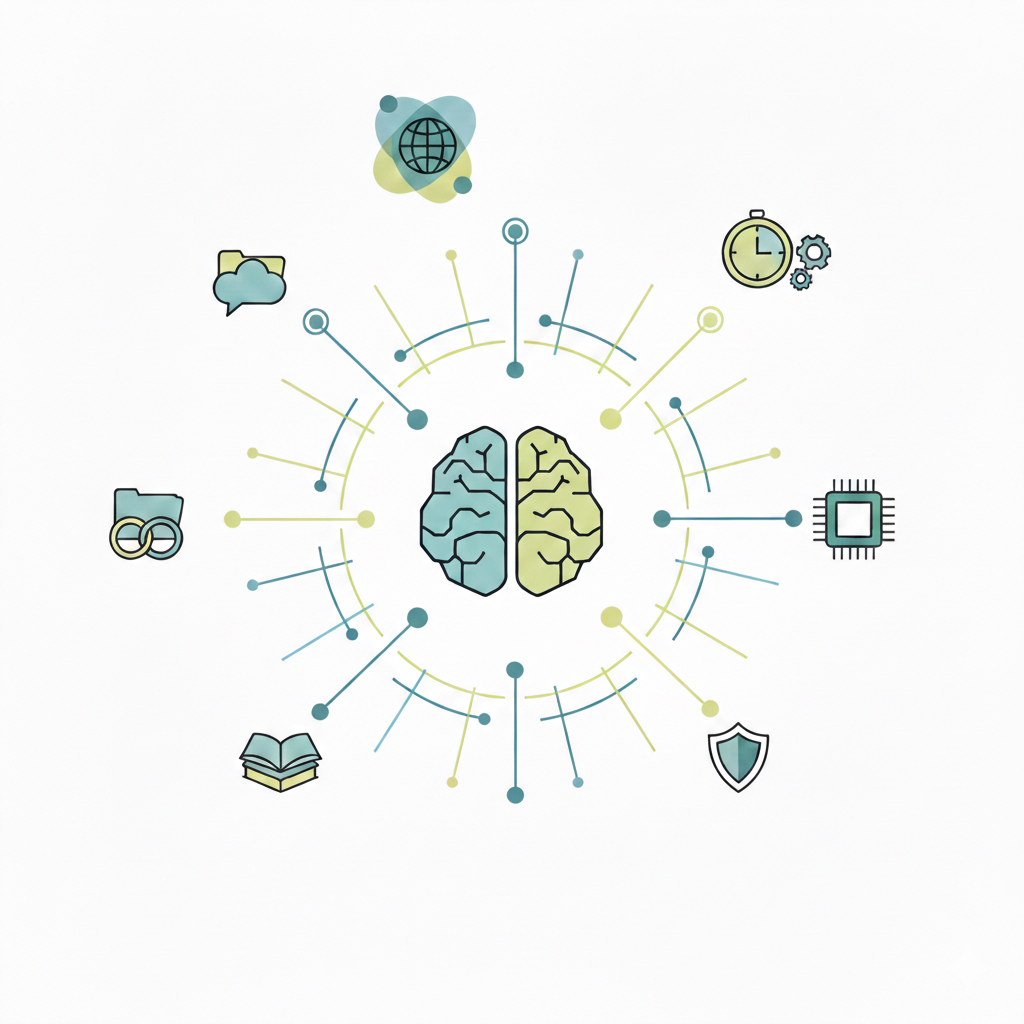
    Image generated by AI

    Bridging the two perspectives

    Taken together, these two contexts show why the mentioned dimensions like equity, trust, localization, and commons play out differently depending on local conditions. When we look at Lebanon and Slovenia together, we see how the same global debate takes quite different forms. In one context, OER supports equity and resilience during crisis. In another, it complements advanced digital systems. What stays constant across both cases are the core values of openness, collaboration, and inclusion. 

    Dependency is the risk; diversification is the strategy 

    Discussions on both sides are also about whether we should treat GenAI not only as tool but as the main infrastructure for education. That raises critical risks of dependency to a small number of platforms, their pricing models, connectivity conditions and policy decisions that educators and learners cannot control. Here, OER can bring in necessary resilience by providing a stable, offline, auditable layer, while using multiple, replaceable GenAI tools as an enhancement layer that can be switched or turned off without breaking education. 

    Owning our educational future

    “Do we still need OER in the age of AI?” is not the right question. We should ask ourselves, “Who do we want to control the future of education?” instead.

    Relying solely on GenAI would mean to run education on a rented land. As the examples of Lebanon and Slovenia show, being dependent on a few commercial GenAI models leaves education vulnerable to rising costs, technical difficulties and policy changes that we cannot control.

    A potential path forward is to use both, enhancing each other’s specifics. OER as foundation can ensure that knowledge remains free, verified by humans and always available to everyone without restrictions. GenAI as accelerator can provide easy, effective and powerful mechanisms to translate, adapt, and update that foundation.

    By assuring the education remains open, owned and operated by community, while using GenAI to empower it, we can ensure that learning remains a public good rather than a private offering. This is how we build tomorrow’s education that is not just high tech, but social, ethical, safe, and open to all.

    This article is part of the series “Sharing is a challenge”, published throughout March 2026, in collaboration with the UNESCO RELIA Chair and the Euniwell Network.

    Newsletter. To receive the upcoming articles from this series by mail, subscribe to our newsletter.

    About the featured image of the article

    The original artistic intention remains that of the artist and can be different from the editorial intention of our remix. We thank Joana Mundana for sharing her work under an open license CC BY-NC-SA 4.0.

    Do we still need OER in the age of AI?

    ” by Fawzi Baroud & Mitja Jermol is under licence CC BY 4.0

  • “My Precious”: Why Academics Guard Their Teaching Resources and Data (But Happily Share Their Articles)

    “My Precious”: Why Academics Guard Their Teaching Resources and Data (But Happily Share Their Articles)

    Javiera Atenas is a Senior Lecturer in the School of Business, Arts, Social Sciences and Technology at University of Suffolk, UK. She leads the postgraduate certificate in academic practice and teaches data analysis and visualisation for social scientists. Her research focuses on developing critical data literacies amongst academics and supporting institutions in developing open education, open data and science policies as well as building capacities in these areas. She has been working in HE in Europe, Latin America and the Middle East as a lecturer, researcher and policy advisor in openness to education, science and data. She is a member of the OER UNESCO dynamic coalition.

    Leo Havemann is a Programme Development Advisor at University College London with a background in digital education, teaching, library,and technology roles, and a doctoral researcher at the Open University. His research interests are in teaching and learning, learning design, and policies and practices in open and digital higher education.

    “My precious…” — Gollum, whispering to a ring. And, perhaps, academics whispering to their lecture slides.

    We love to tell stories about openness: open access, open data, OER, open culture. We write about transparency and sharing as public goods, we publish articles evangelising openness — often in open access journals — and we celebrate it in policy documents, manifestos, declarations, recommendations and conference keynotes.

    Yet when the conversation turns from theoretical openness to practical openness (“Would you mind sharing your teaching materials or data?”), many scholars suddenly clutch their pedagogical artefacts with Gollum-like intensity. The ring is safe, the slides and data stay hidden, and the VLE site remains a sealed vault.

    This tension — openly publishing research while fiercely protecting teaching resources or data — is not simply hypocrisy. It is behavioural, cultural, structural, and deeply human.

    Gollum, whispering to a ring – Image generated with Copilot

    Why the Reluctance? An Expedition Through the Barriers

    1. The Knowledge Gap: Uncertainty Breeds Caution

    Research shows that reluctance to engage with sharing resources openly  often stems from a lack of information. Johnson (2018) portrays the academy as a landscape where academics hesitate, not because they’re opposed to openness, but because they are navigating myths, misconceptions, and incomplete guidance about IP and open practices; along the same lines many resist publishing open data because they do not fully understand its implications, benefits, or governance structures (Janssen et al., 2018).Uncertainty makes people risk-averse. 

    2. Skills, Confidence, Risk 

    As Creative Commons’ global consultation (2022) found, open culture hits barriers at the level of people: limited skills, insufficient training, fear of being judged, concerns about misuse, and plain old anxiety. Sharing teaching materials or data feels personal. These artefacts represent craft, not just content. Unlike research articles — which have been filtered through peer review, editing, and disciplinary conventions — teaching resources can feel incomplete, messy, localised, or idiosyncratic. Their development can be iterative over time and therefore, it is harder to define them as ‘finished’ and therefore ready for exposure to a wider peer audience, as opposed to the students in my classroom this year.

    3. Intrinsic vs. Extrinsic Barriers 

    LeMire (2025) distinguishes between:

    • Intrinsic barriers: lack of motivation, fears about quality, or perceptions that OER are inferior.
    • Extrinsic barriers: workload, lack of institutional support, licensing confusion.

    These map neatly onto faculty concerns: the internal “I’m not sure my materials are good enough” and the external “I don’t have the time, tools, or recognition to do this properly.”

    4. Incentives

    Value-based theory suggests that individuals embrace open practices when the perceived benefits outweigh the costs. Mandates for open access publishing have been relatively successful because:

    • Compliance is required for funding.
    • Reputation is enhanced by publishing openly.
    • The benefits are clear and widely recognised.

    But for teaching resources and datasets?

    • Recognition is scarce.
    • Labour is invisible.
    • Risks feel personally consequential.
    • Policies are inconsistent or absent across institutions.

    In other words: researchers share what is rewarded, not what is merely encouraged.

    Fix the Rewards, Not the People

    Open scholarship/education is often framed as a cultural issue (“We must change attitudes!”), but behavioural research suggests that mandates, incentives, and infrastructures shape behaviour far more effectively than moral exhortations.

    If academics feel that sharing teaching resources or datasets is done only for altruistic purposes, completely optional, or somewhat risky, they will likely continue treating them like Gollum’s ring — precious, and perhaps better protected from prying eyes.

    To move beyond this paradox, both policy and practice must shift.

    Policy Must:

    • Reward openness in promotion criteria.
    • Recognise creation and sharing of OER and open data as legitimate scholarship.
    • Provide clarity and consistency on licensing, copyright, and reuse.
    • Ensure that open data is supported with governance, infrastructure, and training.
    • Foster communities and collaboration.

    Practice Must:

    • Model openness at departmental and institutional levels.
    • Provide development and support for academics in open pedagogy, open science, open licences, and data publishing.
    • Foster communities of sharing so that openness becomes habitual, not exceptional.
    • Celebrate contributions — not only citations but teaching artefacts, datasets, and learning designs.
    Solutions to overcome challenges driven by open practices community – Image generated with Copilot

    Open scholarship is not merely a technical exercise; it is a social one. It is vital to recognise the role of communities and collaboration in supporting these practices (Havemann et al., 2023). Behavioural reluctance is understandable, given the risks, norms, and incentive structures in place. But the potential benefits — transparency, equity, innovation, and collective growth — are too significant to leave buried in personal drives and institutional servers. 

    To unlock academic “preciouses” for the common good, we must change the environment, not just the mindset. And maybe help academics see that sharing their resources does not mean losing them, but multiplying their impact.

    ———

    References 

    Creative Commons. (2022, July 22). What are the barriers to open culture? Here’s what the CC community has to say. https://creativecommons.org/2022/07/22/what-are-the-barriers-to-open-culture-heres-what-the-cc-community-has-to-say/ 

    Havemann, L., Corti, P., Atenas, J., Nerantzi, C. and Martinez-Arboleda, A. (2023). Making the case: opening education through collaboration. Rivista di Digital Politics, 3(2) pp. 305–326. https://doi.org/10.53227/108468

    Janssen, M., Charalabidis, Y., & Zuiderwijk, A. (2012). Benefits, adoption barriers and myths of open data and open government. Information Systems Management, 29(4), 258–268. https://doi.org/10.1080/10580530.2012.716740 

    Johnson, G. J. (2018). Cultural, ideological and practical barriers to open access adoption within the UK academy: An ethnographically framed examination. Insights: The UKSG Journal, 31(0), 22. https://doi.org/10.1629/uksg.400 

    LeMire, S. (2025). Faculty barriers to using open educational resources. Open Learning: The Journal of Open, Distance and e-Learning, 1–19. https://doi.org/10.1080/02680513.2025.2573338 

    ———

    This article is part of the series “Sharing is a challenge”, published throughout March 2026, in collaboration with the UNESCO RELIA Chair and the Euniwell Network.

    Newsletter. To receive the upcoming articles from this series by mail, subscribe to our newsletter.

    About the featured image of the article

    The original artistic intention remains that of the artist and can be different from the editorial intention of our remix. We thank Lorenzo Miola for sharing his work under an open license CC BY-NC-SA 4.0.
    “My Precious”: Why Academics Guard Their Teaching Resources and Data (But Happily Share Their Articles)

    by Javiera Atenas & Leo Havemann is under licence CC BY 4.0

  • Beyond Prestige: Whose Knowledge Counts in Open Education?

    Beyond Prestige: Whose Knowledge Counts in Open Education?

    Marcela Morales is Co-Executive Director of Open Education Global, with over 15 years of experience advancing open education worldwide. She works to expand equitable access to knowledge, foster global collaboration, and support open practices through partnerships with institutions, governments, and civil society organizations.

    When sharing feels reserved for an elite few

    One of the most persistent, yet least visible, hurdles in open education is legitimacy. It is not about technology, licensing, or institutional policy. It is about an internalized belief that whispers, sometimes quite loudly:

    “Sharing is only worthwhile for an elite few. What is the point of sharing my lesson or lesson plan when I am not at a prestigious institution? I am not at that level.”

    This feeling is widespread across educational contexts around the world, spanning formal and informal settings, well-resourced and resource-constrained institutions, and systems with very different histories, missions, and expectations. Educators may be deeply committed to their learners and highly skilled in their practice, yet still doubt whether their materials are “good enough” to be shared openly.

    Legitimacy, in this sense, is socially constructed. Prestige, rankings, institutional branding, and publication cultures strongly influence whose knowledge is seen as valuable. Open education, despite its inclusive ideals, does not exist outside these dynamics. Repositories, conferences, and citation practices can unintentionally reinforce hierarchies by amplifying voices that are already widely recognized and validated.

    The result is a quiet but powerful form of self-censorship. Educators hold back not because they lack expertise, but because they fear judgment about their context, their approach, their institutional standing, or whether their contributions will be seen as legitimate or relevant at all. These doubts are not abstract; they are heard repeatedly in open education spaces:

    • My materials are too basic to be worth sharing.
    • My teaching context will be dismissed as less rigorous or less relevant.
    • What I do is too local and specific to matter beyond my setting.
    • I don’t have the right language, framing, or institutional standing to contribute.

    This hesitation is not trivial. When only those who already feel legitimate choose to share, the open education ecosystem becomes narrower, less diverse, and increasingly shaped by a limited set of voices and experiences. The result is an incomplete picture of teaching and learning—one that overrepresents well-resourced environments and underrepresents the everyday realities in which most education actually takes place. Learners and educators alike lose access to materials grounded in local contexts, constrained resources, multilingual classrooms, culturally situated knowledge, and pedagogical traditions developed in response to real-world limitations.

    Ironically, these are often the very contexts where open educational resources are most urgently needed and where they can have the greatest impact. When these perspectives remain absent, openness risks reproducing the same inequities it seeks to address, rather than serving as a tool for widening participation, relevance, and collective learning.

    “Invisible Man” by isarisariver,
    https://www.flickr.com/photos/lescientist/8430282209
    licensed under CC BY-NC-SA 2.0.

    Reframing legitimacy: from prestige to practice

    If legitimacy is a hurdle, it is also one that can be dismantled, collectively and intentionally.

    1. Redefine what counts as expertise

    Open education must move beyond equating legitimacy with institutional prestige. Expertise is not produced only in elite institutions; it is built through sustained practice, iteration, and close responsiveness to learners. A lesson refined over years in a teaching-focused institution, a rural school, or an online program carries a different, but equally valuable, kind of knowledge.  

    Sharing is not a claim to perfection. It is an invitation to learn from lived pedagogical experience. Describing resources as “adaptable,” “context-specific,” or “tested in a particular setting” helps shift expectations away from universal models and toward contributions meant to be reused, questioned, and reshaped by others.

    1. Normalize “unfinished” sharing

    One powerful way to lower the legitimacy barrier is to normalize the sharing of materials that are not polished, final, or comprehensive. Drafts, activity outlines, assessment prompts, and reflective teaching notes often carry as much practical value as fully developed resources, particularly for educators seeking ideas they can adapt rather than replicate.

    Open education does not demand completeness or perfection; it depends on reuse, revision, and contextual adaptation. Making this explicit in workshops, repositories, and calls for contributions helps shift expectations and signals that contributing is an act of participation and collective learning, not a performance to be evaluated.

    1. Make context visible, not invisible

    Educators often worry that their institutional or teaching context will be perceived as a weakness rather than a strength. Instead, context should be understood as essential metadata, not as a liability to be concealed. Clearly describing who a resource was designed for, under what conditions, and with which pedagogical assumptions increases both its usefulness and its credibility for others.

    A lesson developed for first-generation learners, multilingual classrooms, or low-bandwidth environments carries a form of legitimacy grounded in honesty and relevance. Context does not diminish a resource’s value; it makes that value visible.

    1. Build relational, not reputational, recognition

    Legitimacy is built through relationships, not reputation alone. Communities of practice, peer feedback spaces, and regional or thematic networks play a critical role in helping educators feel seen, supported, and confident in their contributions. When sharing takes place within trusted communities, confidence grows over time, and the step toward more visible, public sharing becomes far less intimidating.

    Recognition practices in open education should therefore prioritize contribution, care, and collaboration, rather than focusing narrowly on visibility or quantitative metrics. Simple actions such as acknowledging adaptations, thanking contributors, or intentionally amplifying diverse voices can have a lasting and meaningful impact.

    1. Name the problem explicitly

    Finally, legitimacy must be talked about openly. Naming this hurdle helps educators recognize that they are not alone, and that their doubts are not personal shortcomings but the product of broader structural and cultural dynamics. Workshops, training sessions, and open education initiatives should explicitly surface issues such as impostor feelings and prestige bias as part of meaningful capacity building.

    When legitimacy is understood as a shared, systemic challenge rather than an individual deficit, it becomes easier to acknowledge, discuss, and gradually address together.

    Sharing as an act of belonging

    At its core, open education is not only about access to resources; it is about belonging to a shared knowledge commons. Sharing becomes an act of presence and recognition, a way of saying: my experience matters, my context matters, and I belong to this collective effort.

    Legitimacy does not always precede sharing; it often emerges through the act of sharing itself. Each contribution, however small it may feel, expands what open education can be like and who it is for.

    Clearing the hurdle of legitimacy means recognizing that open education is weakened when only a few feel entitled to speak and strengthened as more people come to realize they already have something worth sharing.

    __________________________________________

    Note: Artificial intelligence was used to support grammatical review and the translation process. The content, ideas, and approach are the responsibility of the author.

    This article is part of the series “Sharing is a challenge”, published throughout March 2026, in collaboration with the UNESCO RELIA Chair and the Euniwell Network.

    Newsletter. To receive the upcoming articles from this series by mail, subscribe to our newsletter.

    About the featured image of the article

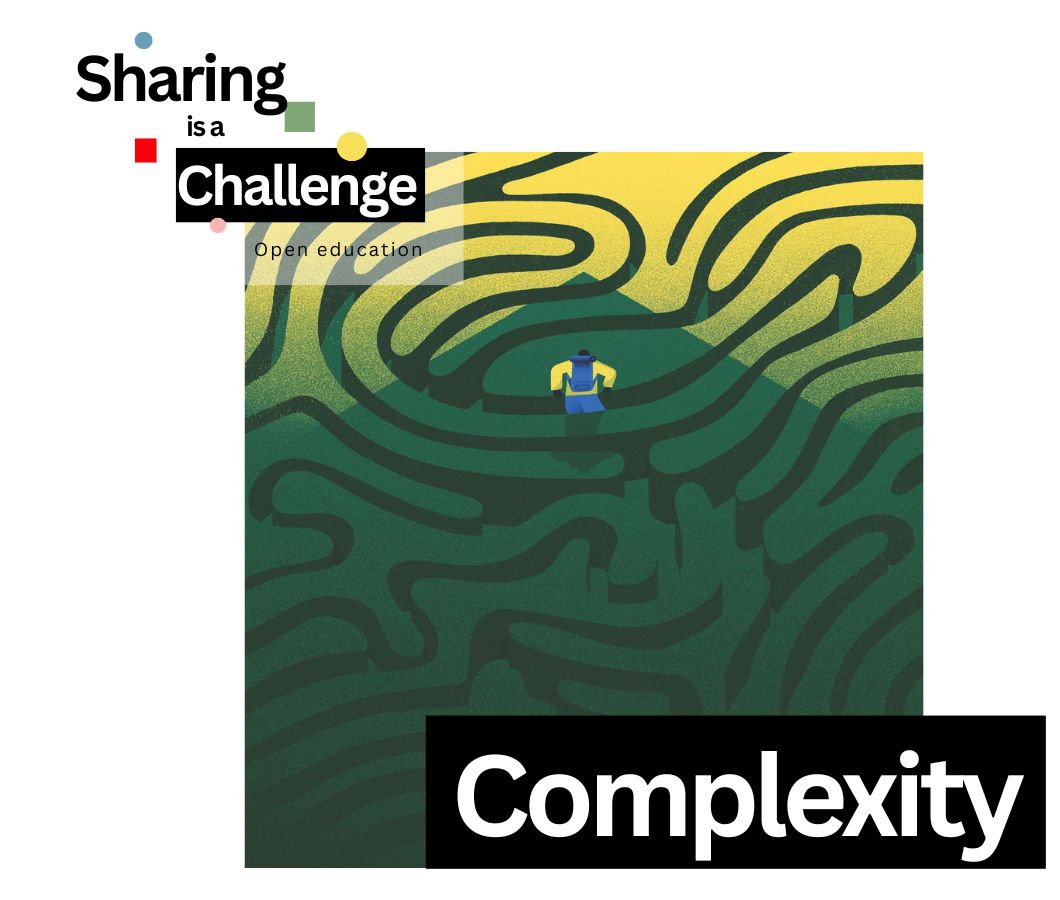
    The original artistic intention remains that of the artist and can be different from the editorial intention of our remix. We thank Luka Seme for sharing his work on Fine Acts under an open license CC BY-NC-SA 4.0.
    Beyond Prestige: Whose Knowledge Counts in Open Education?

    ” by Marcela Morales is under licence CC BY 4.0

  • Sharing… Our challenges for 2026

    Sharing… Our challenges for 2026

    Every year at the beginning of March, open education is celebrated during OEWeek (Open Education Week), promoted by Open Education Global. This is an event during which groups from around the world promote ideas and projects related to open education.

    In 2025, with the help of our friends at Unesco Chair RELIA and the European University of Wellbeing EUniWell, we identified 23 good reasons in favour of open education. We then put out a call for contributions and “recruited” authors from 13 countries. In March 2025, we published their contributions… 23 articles in 8 languages!

    This year, sharing is our guiding thread.

    All educators and teachers will choose to define what they do with the verb “to share”. And yet, when we look more closely, this sharing is often very limited.

    This time, we have identified 16 obstacles or challenges to sharing: some are real and may be linked to a lack of technological or legal skills. Others are linked to our own limitations, fears and desires. However, in 2026, we need to share better, so understanding what is holding us back and gathering ideas and solutions from all continents is one way forward…

    As last year, we put out a call for contributions and quickly found volunteers. There are now 27 of them, representing 15 countries in the Americas, Africa, Asia and Europe. We are especially happy to have 6 contributions from UNOE partners.

    A surprise for this 2026 edition. We are pleased to add a first article by Ahmed Galai to launch the series, on the relationship between teaching and sharing. Mr Ahmed Ben Tahar Galai is a human and peoples’ rights activist, member of the steering committee of the Tunisian Human Rights League (THDR) from 2000 to 2016 (Nobel Peace Prize 2015 with the National Dialogue Quartet). He is also a member of the scientific council of the Arab Institute for Human Rights and the national commission for the reform of the Tunisian education system.

    The teams in charge of the three blogs on which the articles will be published are very enthusiastic, even if they also have to deal with some interesting (and expected) difficulties, particularly with regard to the different ways of managing multilingualism: once again, we have encouraged authors to write in their own language. At the time of writing this introduction, we are working on half a dozen languages.

    Finally, all contributions will be licensed under CC BY to facilitate their dissemination and reuse. We are available to answer any questions or provide assistance, for example with the republication of articles.

    We look forward to seeing you in a few weeks’ time to discover our sixteen challenges over the course of a month.

    If you wish to receice our article series directly in your inbox
    during the month of March, please follow this link.