
By Dylan Maxwell Gandiwa, University of Cape town, South Africa
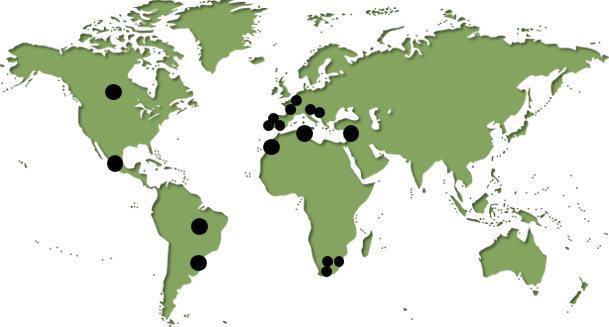
Throughout my academic journey, I have been fortunate to experience different places, communities, and learning environments. Moving between regions at different stages of my life exposed me to people with different perspectives and opportunities i.e. doing my primary school in Zimbabwe in a township, High School at a model C school Midrand South Africa and Tertiary at the best university in Africa ( UCT). Over time, I came to a realisation that many young people can become far more than they imagine and break past their limits if they are given access to quality education, the right resources, and proper guidance that allows them to contribute back to society in meaningful ways.
I grew up in a small township in Zimbabwe where no one dares to dream, due to the living conditions. We all lived in survival mode rather than seeking to thrive. At one point, renting a small room of my own seemed like a significant achievement. But the more I read about people who pursued knowledge, travelled the world and accomplished their goals, it sparked my curiosity. The idea felt out of reach at first but my perspective changed when I was placed in an environment with teachers who were role models.
For this reason, I strongly believe in open education coupled by human guidance. Open education helps create opportunities for people who may not have access to knowledge, resources, and diverse perspectives in their immediate surroundings and a shark only grows directly proportional to the size of its tank. Open education serves as a window into new ways of thinking and allows learners to participate in conversations that extend far beyond their local communities.
This observation has shaped how I view artificial intelligence in education. In many situations, AI provides information faster than a teacher. It can instantly provide explanations, summaries and easily answer questions. This does not mean that AI is harmful to education; rather it provides an enormous potential to support open education by making knowledge more accessible. Students use AI to understand difficult concepts, organise notes, generate study questions and learn efficiently. I have seen classmates use AI as a learning companion throughout their studies and they have done exceptionally well.
What truly astonishes me is the gap between how the students use AI and how our institutions, South Africa in particular, often talk about it. In one lecture we were reminded of the AI governing rules, how use of it risks loss of intellectualism due to the risk of academic integrity. Later on, the same day in Business Intelligence our lecturer urged us to use AI because it was the best tool ever discovered by humankind therefore, we should use it the same way we use our calculators in Maths to speed up the process. It was astonishing how the same technology that was presented as a challenge was not simultaneously being used as a tool for efficiency.
This difference between the two approaches raised important questions that if open education seeks to remove barriers, how should universities approach the technology that comes with it and expand access to learning? Furthermore, these questions highlighted the need for a deeper understanding of AI and the role it plays in education.
Yet, despite its fast and remarkable ability, I have observed that AI has highlighted the importance of the human teacher rather than diminishing it and that education is not only about the access to information but also relationships that guide that acquired knowledge. A human teacher notices things beyond what words can phrase, can give answers and explanations given the emotional state the students are in. A human teacher knows when a learner needs encouragement and when they need to be challenged thus making them a transitional means of information. Such moments are difficult to automate because they rely on human understanding, empathy, and firsthand experience with the student. While AI serves as a powerful tool, the mentorship by human teachers still remains crucial.
AI can make knowledge more accessible than ever before, and I believe it will continue to play an important role in expanding educational opportunities. However, as I reflect on my own journey, I have seen that information alone does not transform lives, knowledge is most powerful when it is accompanied by human guidance.
