
By Hiba Haj Mahmoud, University of Sousse, Tunisia
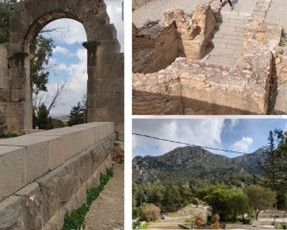
I still remember the surprise on our faces when our history teacher told us there would be no written exam. Instead, we were going on a trip. We visited Zaghouan, an ancient city in Tunisia filled with monuments, old temples, mountains, and traces of a history I had only ever seen in textbooks. That day, history stopped being a lesson on a page. We walked through it. We looked around slowly, touched the stones, explored narrow streets, and listened to stories connected to the places we were standing in. I still remember the feeling of sunlight on the old walls and how even small details suddenly felt meaningful because they were no longer abstract. Each of us carried a camera. Not Google Images. Not copied illustrations from a school book. Our own photos. Our own perspective.
The assignment was simple: return home, write a report, and present our experience to the class. What astonished me was not the trip itself, but what happened afterward. Every student performed well.
The presentations were thoughtful, personal, and completely different from one another. Even though we had visited the same places together, each student noticed different details, asked different questions, and connected emotionally to different moments. For once, learning did not feel like preparation for a grade. It felt real. In most traditional exams, students expect one correct answer, one expected structure, and a limited way of thinking. Success often depends on how well they can reproduce what was taught. But here, there was no single version of the truth to memorize. That experience made me realize something important at a very young age: when students become part of what they are learning, they no longer study just to memorize. They remember because the learning becomes meaningful. I also remember something else: there was almost no stress. We discussed our ideas together, compared our observations, laughed during the presentations, and learned from one another naturally. The evaluation did not feel like a punishment or a moment of fear. It felt like sharing an experience. Too often, assessment feels transactional: the teacher delivers information, the student reproduces it, and the grade measures how well the expected answer has been followed. Understanding sometimes becomes secondary to memorization. But in Zaghouan, assessment felt alive.
Years later, as a PhD student working on adaptive assessment and collaborative learning environments, I often return to this experience. Not simply as a memory, but as evidence that learning can be deeply human, social, and meaningful when assessment is designed differently. What still surprises me today is that experiences like this remain rare. If we already know that students learn better when they actively participate, explore, collaborate, and connect personally with knowledge, why do so many educational systems still rely on forms of assessment that reduce learning to stress, repetition, and standardized answers?
Today, this question becomes even more important as learning increasingly moves into digital environments, where intelligent systems and AI technologies start to support roles that were traditionally reserved for teachers, including guidance, feedback, and even assessment. This shift raises an important reflection: how can we preserve meaningful learning experiences in systems that are becoming more automated and data-driven? Perhaps the answer lies not in changing how we test students, but in rethinking what it truly means to learn.
