


Alan Levine, Open Education Global
After connecting a Mac SE/30 server to the Maricopa Community Colleges network in 1993, Alan Levine (https://cog.dog) has not left the web since. As Director of Community Engagement for Open Education Global, he advocates for the generosity of educators who openly share their work.
I was “grateful” that the topic titled Ungratefulness was available with this suggested framing for authors:
- Sharing takes up a lot of my time, and when I do it, no one says thank you. There are few mechanisms in place for recipients to say thank you. Yet in sharing mechanisms, saying thank you is important.
I was puzzled over this assertion that sharing takes time– to me the act of sharing is quick in the click of a publish button. Perhaps the voice stating making this claim is speaking of time spent trying to promote it? And in my experience, harboring expectations of that is a set up for disappointment.
- “Expectations are resentments waiting to happen.” Anne Lamott in Crooked Little Heart
What follows is largely personal, based on my own experiences benefitting from the connectivity enabled by the internet since the pre-web 1980s.
We do not need mechanisms to deliver gratitude, we ought to make it our regular action. Putting aside expectations allows the serendipity of receiving unsolicited thanks much more powerful.
I learned almost everything about sharing from photos.
Thousands of Photos Ago
My favorite hobby is photography, purely as an amateur. While experimenting with early digital cameras, in 2004 I came across this site for sharing photos called flickr. From the start, flickr offered a feature to automatically assign a Creative Commons license to all uploads. Its feature set of site wide search, tags, comments, groups were all the working elements of what was being called early on as “social media”. I remain active there for many reasons.
A few years later, a few private messages started coming in via Flickr mail asking permission to reuse my photos for magazines, books, posters, etc. I always responded affirmatively but felt it was my educator duty to explain that the CC BY license meant they could do so without asking permission.
One day a response came back, “Yes, I know all about CC licenses. I just thought you would want to know that your photo was used.” That changed everything, not just my habit of explaining open licenses but also recognizing that a direct message to a content creator was a means not only of saying thanks, but letting them know where their works have gone elsewhere in the world.
Inspired by a call in 2016 by a Mozilla Maker party, I embarked on my own counter practice experiment to change the license of all my flickr photos to CC0. My photography is solely for my own purposes, not for income. If anyone could make money on them, I congratulate them. More importantly I was curious to see if that had an impact on getting credit or thanked when it was not even a condition of an open license. No, it continued to happen and does to this day.
Always Be Attributing
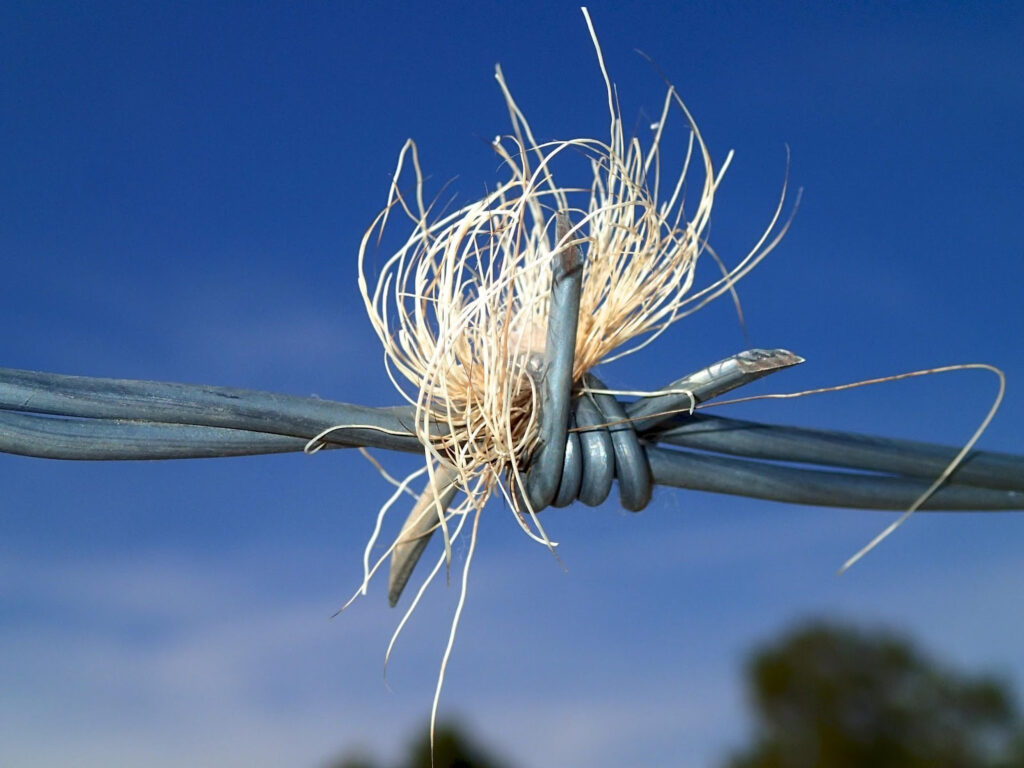
The photo I used for this post is my own photo. I do not need permission to use it! Even more, it is shared into the public domain using CC0. Again, the rules are that I do not have to attribute. Why bother?
If I publish something that uses this unattributed photo, what does it tell a reader? That it’s okay not to attribute? Even more, what if you come across that unattributed image, what if you want to see more works by the same person or similar ones from a collection?
I adopted this approach of Always Be Attributing because I see it as a means of expressing gratitude, even once trying to coin it as “thanktribution”.
These are just my humble experiences, what about some research on gratitude in networked environments? Can it be mechanized?
Gratitude Researched
In no way exhaustive, my web bookmarks hold a few references I discovered through my interest in gratitude. Can automation of reuse help? A 2011 study on an online Scratch community found the automated notification of remix of people’s works was much less valuable than direct expressions of appreciation from one person to another.
J. Nathan Mathias has co-authored several articles on networks and systems of gratitude including a study of the motivating effect of implementation of appreciation amongst Wikipedians via WikiThanks and WikiLove. In Designing Acknowledgment on the Web Mathias expresses what matches my own experiences:
A system which acknowledges the beauty of cooperative relationships can’t be based on the impersonal idea of hypertext or the egocentric notion of authorship. It can’t rely on licenses to threaten people into acknowledging each other. Instead, we need an aesthetic of acknowledgement that values relationships and revels in the joy of working with people who inspire us. Acknowledgement should be intrinsically exciting and fun, a gift and a party rather than a duty.
The proliferation of “like” buttons in social media (which now appears in email) seems to offer a small and easily dispensed dose of appreciation, but to me likes are cheap– they pale in comparison to the impact of a sincere individual message of appreciation. Yes, finding ways to contact colleagues directly can take much time, and perhaps there is some middle ground for small scale acknowledgement and appreciation.
A Tip of the Hat As Thanks?
In my role at Open Education Global I am fortunate to support the annual Open Education Awards for Excellence. Submitting a nomination calls for a moderate amount of effort and the idea of awards implies major achievements. And it happens only once a year.
I have pondered with my colleagues what might be done for ongoing levels of expressing appreciation for smaller scale acts. In a podcast recording with Bryan Mathers, a well known designer and creator of the Remixer Machine he described a parallel conversation, in which we brainstormed the idea of a way to quickly create and send messages as a “hat tip” (or for where Bryan is from, a “cap doff”). The act was popularized by a comic artist ironically named Jimmy Hatlo as acknowledgement to contributions by readers. Online the hat tip was popularized amongst bloggers and programmers, abbreviated “h/t” as credit to ideas from other writers or reuse of another’s bit of code.
While recognizing a tip of a hat as perhaps an act more known in limited parts of the world, we hope the act of a gesture of recognition might be widely understood. As Bryan does, he quickly created a new template for creating new remixes of hat tip messages. Making one is a matter of editing the template to choose a different hat style (perhaps it needs more varieties), colors, and the text message.
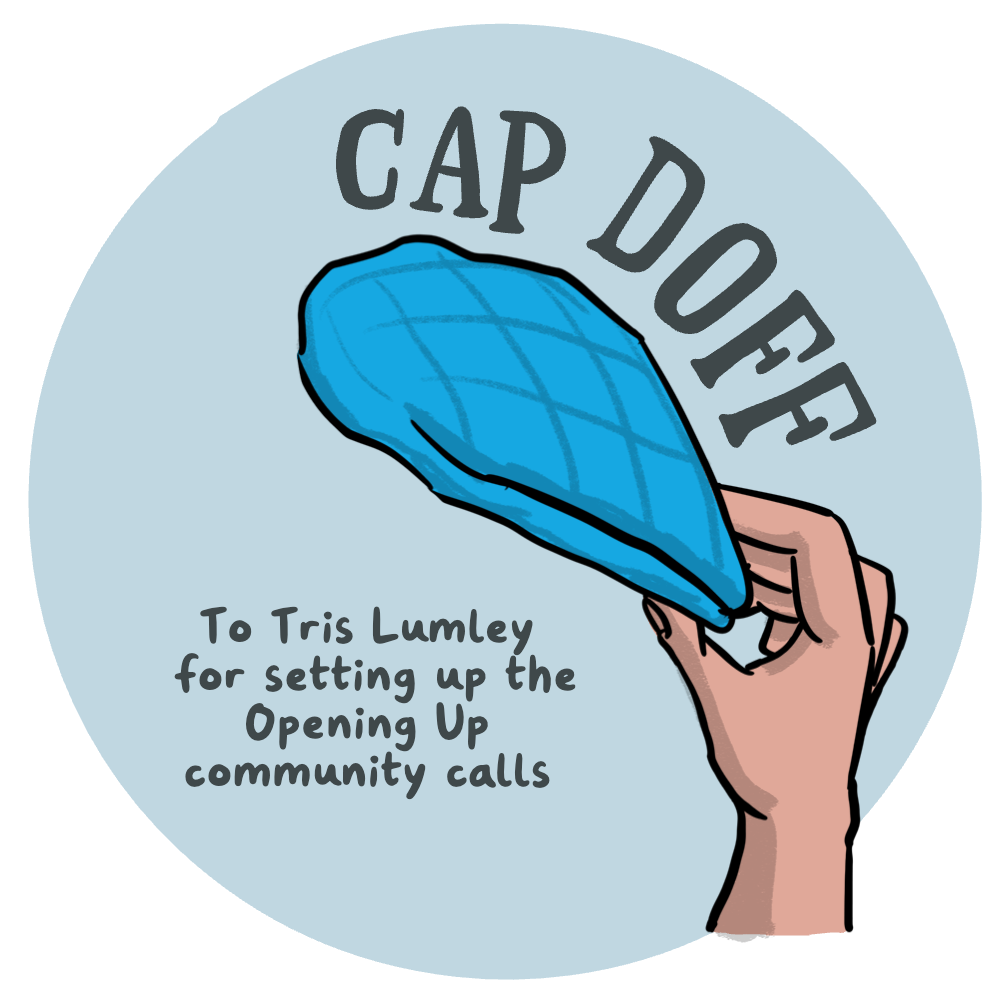
Creating a hat tip remix consumes maybe 5 minutes of time. I see it as a means to easily express appreciation for the acts that colleagues do for us on a regular basis. Whether shared publicly or privately, my hope has been that receiving a hat tip message will generate a desire in the recipient to do the same for another person.
You can count on me sending one to my editors! I can only dream of such actions spreading farther, and you as a reader can help make that happen.
Serendipity and Effect of the Unexpected Act
For me, the openness of the world wide web has generated an ongoing wave of serendipitous acts from people I have never met. Nothing can match the surprise effect of a genuine message of appreciation or thanks. So while one cannot expect it, perhaps regular acts of such acts to others creates a pool of positive serendipitous energy.
I have held a long fascination with the amazing things that have happened as a result of openly sharing. It all started with a flickr photo of an orange flower I saw at my home in Arizona.
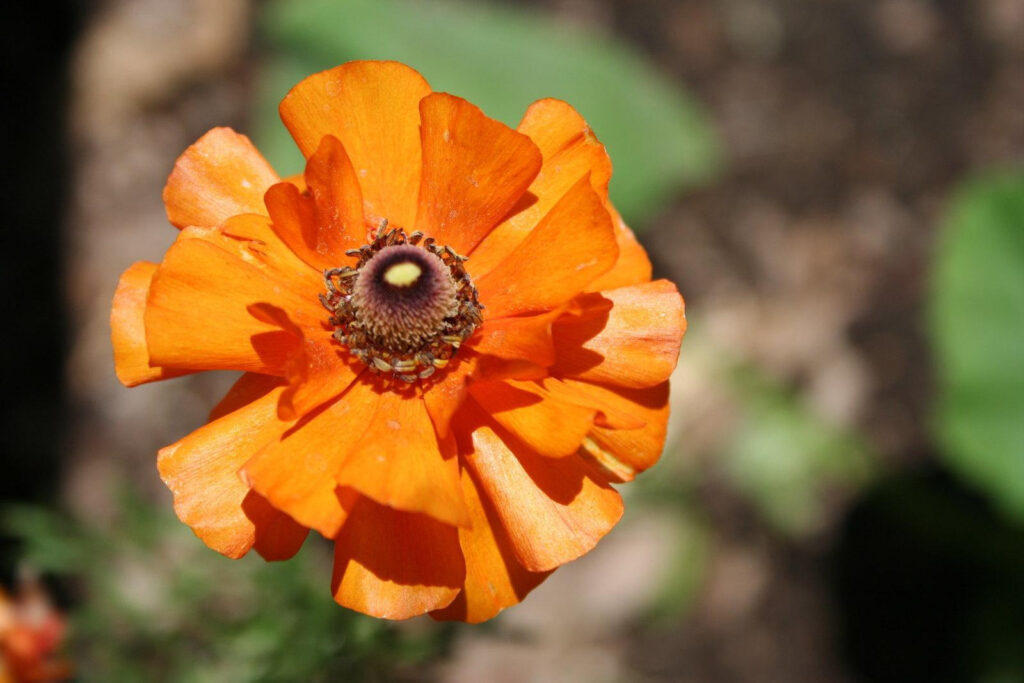
In 2009 I was giving a presentation far away in Hobart Tasmania on the unexpected positive things that could happen on the web. I shared how I had learned that if I tagged my flickr photos “unknown flower” other people took it on themselves to add a comment with an identification. I showed the flickr photo to the audience and how a person named Kirsty had commented “I suspect it is a ranunculus.”
That’s pretty amazing, right?
Then a hand went up in the back of the room. A woman stood up and said, “That was me!”
The room exploded with astonishment and joy for all of us (and the presentation was de-railed), but the sheer improbability of this act still amazes and inspires me decades later.
Even in the worrisome present day, I put much hope in the very small scale human to human acts of appreciation, thanks, and generosity. They cannot be guaranteed or promised, but they more than counter feelings of ungratefulness.
Note: GenAI played no role whatsoever in the writing of this article.
——
References
Computers can’t Give Credit: How Automatic Attribution Falls Short in an Online Remixing Community https://www.microsoft.com/en-us/research/publication/computers-cant-give-credit-how-automatic-attribution-falls-short-in-an-online-remixing-community/
Researching Love and Thanks on Wikipedia: CrowdCamp Hackathon Report: https://civic.mit.edu/blog/natematias/researching-love-and-thanks-on-wikipedia-crowdcamp-hackathon-report
Designing Acknowledgment on the Web: https://civic.mit.edu/blog/natematias/designing-acknowledgment-on-the-web.html
Gratitude and its Dangers in Social Technologies: https://civic.mit.edu/blog/natematias/gratitude-and-its-dangers-in-social-technologies.html
Open Gratitude: https://bccampus.ca/2021/02/10/open-gratitude/
—–
This article is part of the series “Sharing is a challenge”, published throughout March 2026, in collaboration with the UNESCO RELIA Chair and the Euniwell Network.
Newsletter. To receive the upcoming articles from this series by mail, subscribe to our newsletter.
The original artistic intention remains that of the artist and can be different from the editorial intention of our remix. We thank Riccardo Cianfarani for sharing his work under an open licence CC BY-NC-SA 4.0.

“
Potential Serendipity over Expectations of Gratitude
” by Alan Levine l is licensed under CC BY 4.0