

This article was originally written in Hungarian. The original version is available here.
Zoltan Lantos, Semmelweis University (Budapest, Hungary), Faculty of Health Sciences.
A digital health expert with a background in immunology, behavioural economics and art therapy, and Founder and Head of the Department of Virtual Health Guide Methodology. Following professional experience in the pharmaceutical industry, international health-sector consulting and social innovation laboratories, he currently takes an active role in the development of the European Health Data Space by leading the development of the common European digital health public service backbone network. His current professional interests focus on the development of a data-driven shared economy and on community-based support for a healthy society.
It is required … well, I do share
For a long time, making my teaching materials openly available, especially choosing an appropriate licence and then publishing them accordingly, felt like a compulsory chore. I did it because I had accepted others’ arguments that it was useful, but I did not experience any real benefit in my own work. That changed completely when I developed a practical simulation case and the associated learning tasks.
When I completed this teaching unit, I genuinely felt that I had done very good work. Its structure was clear, the tasks worked well, and the examples reflected exactly the kinds of everyday situations that professionals encounter in practice. It was very well received by domestic students, it also worked well with groups in neighbouring countries, and I could see that most European students understood and engaged with it.
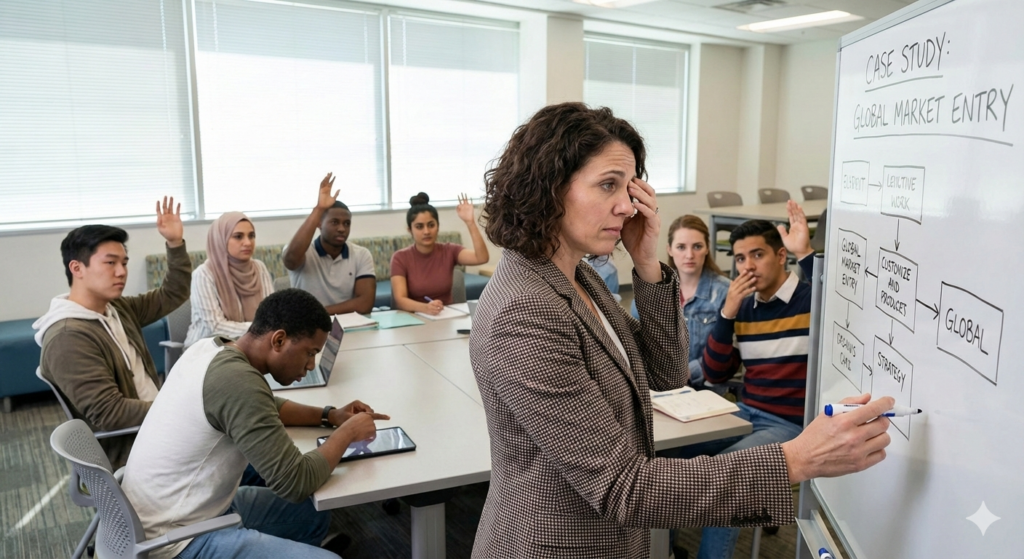
Later, I started teaching the same material on a course with a large proportion of students from outside Europe. From the very first session, it was obvious that something was not right. They seemed confused, asked a large number of clarifying questions, and appeared to lack what I had assumed to be basic background knowledge. The tasks did not trigger the discussions I had become used to. I assumed that they must have studied very different material in earlier years, and I even thought that perhaps they were already at a disadvantage compared to our students from secondary school onwards.
Like many of my other teaching materials, I also made this one openly available. Rather mechanically, as I usually did.
Surpriiiise!
Several colleagues adopted the material and, this time, they did not only use it but also modified it, and shared their changes openly as well. Some replaced situations that were based on typically European student life with examples drawn from their own contexts. Others simplified the language because, for most of their students, understanding more sophisticated English was difficult. Someone else added a short teaching note to examples that touched on culturally sensitive issues in their local context.
As these small adaptations started to arrive and I began to take them into account and apply them in my own teaching, the atmosphere and dynamics of my classes also changed. The material started to work in several different educational and cultural environments.
It was then that I truly understood what the Open Educational Resources mindset means to me. It is not about creating something once and simply putting it online. It is about entering a shared development community and a continuous cycle of improvement.
In this cycle, it is not the original author who matters most. What matters far more is that the material is constantly tested in real teaching situations and that the experiences gained are fed back into the material itself.
Sharing is caring
This type of reciprocity is, for me, very similar to the way the sharing economy works. There, too, the key point is not simply having one-off access to a service, but the fact that many users continuously shape and improve the system. The more experience is fed back, the better the system becomes for everyone.
In my own teaching practice, this had very tangible effects. Material that had previously worked really well only with certain student groups gradually became much more accessible to a wider range of students. Feedback from my non-European students improved noticeably, group work became more relaxed and confident, and I no longer had to spend so much time explaining the background of the example situations when assigning tasks.
It was then that I truly understood that my material was not poor, it had simply been designed for a narrower cultural context than that of my students. It was built on cultural and educational assumptions that I had previously taken for granted, but which no longer worked in a fully international student community.
The greatest gain, however, was not that a single teaching unit became better. It was that I no longer had to work out on my own how to improve it. I became part of an almost invisible, yet strong professional community. Sharing my teaching materials did not reduce my professional autonomy; instead, it created a new form of professional collaboration that I can engage with in a very concrete and practical way.
And, ultimately, it is the students who benefit the most from all of this. Of course, my classes are much better too. ☺
This article is part of the series “Sharing is a challenge”, published throughout March 2026, in collaboration with the UNESCO RELIA Chair and theEuniwell Network.
Newsletter: To receive the upcoming articles from this series by mail, subscribe to our newsletter.
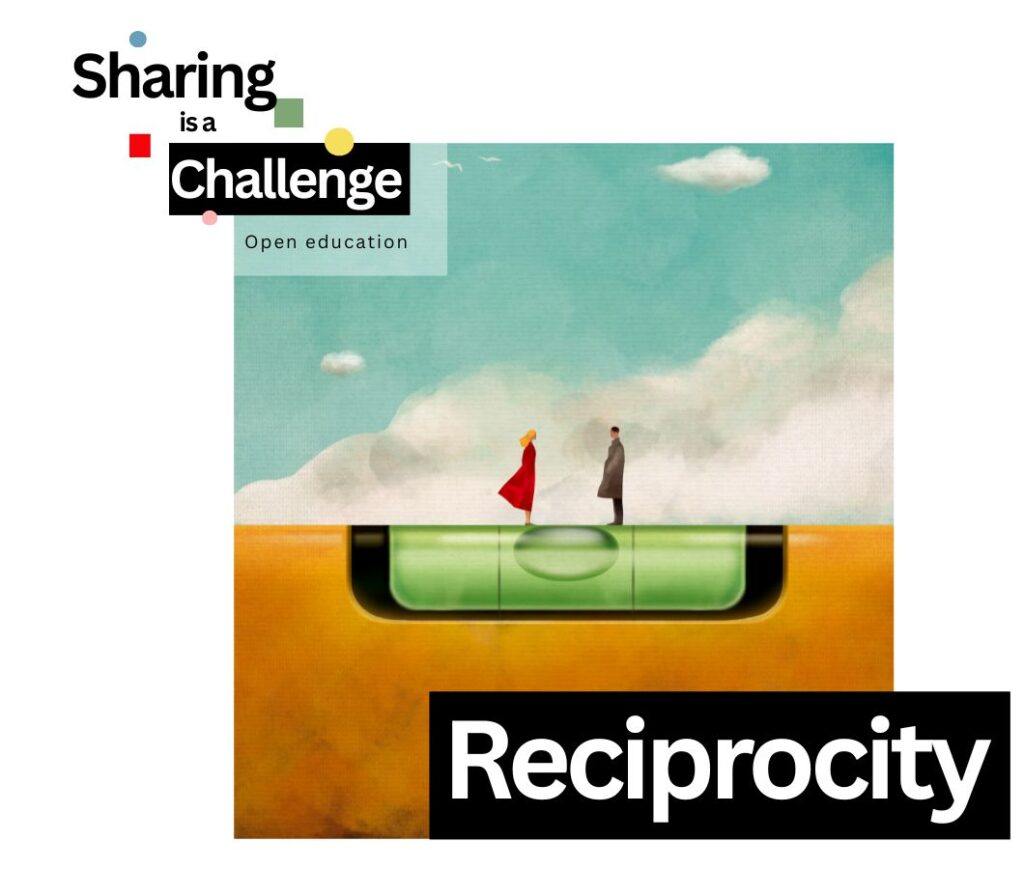
The original artistic intention remains that of the artist and can be different from the editorial intention of our remix. We thank Nebojša Cvetković for sharing his work under an open licence CC BY-NC-SA 4.0.