


This article was originally written in Italian. The original version is available here.
Benedetta Calonaci is a librarian at the Social Sciences Library of the University of Florence. After graduating in Classical Literature from the University of Pisa (1996), she worked in research libraries and, since 2006, at the Social Sciences Library of the University of Florence.She is also Coordinator of the UniFi Library System Working Group ‘Support to open access and research evaluation’.
Alessandra Gammino is a librarian at the Science Library of the University of Florence.
Creating an open educational resource is a process that certainly does not end with its physical creation, organization, and presentation of content.
Once created, an OER must be able to circulate freely in the vast sea of the internet; in other words, it must be easily retrievable, clearly interpretable in terms of content, and fully accessible on different systems. Only in this way will it be possible to bring the resource together with its “ideal” user, but also with unexpected users, exploiting the serendipity of the internet. In a word, it is a matter of optimizing its discoverability.
Complying with all these requirements is not easy and can become an additional workload for creators. It is assumed that they are well informed, that they know the different repositories and how they work, that they have active accounts for the relevant non-institutional platforms and are familiar with their interfaces, and finally, that they know metadata and the best way to generate efficient ones. Finding information and acquiring skills, as well as the mechanical process of uploading products, takes up the creator’s time, who may come to view the process as a whole as disadvantageous, especially given the fear that the resource will not be discovered, used, and therefore valued. Sharing an OER is an act of care. Doing so should be as easy as possible, which is why we offer a summary of the main points to keep in mind in order to optimize discoverability and thus social impact.

The repository
Carefully choosing the repository in which to store your products, selecting from among the so-called “Trusted repositories,” is of fundamental importance. Certainly, opting for platforms promoted by academic and cultural institutions that adhere to descriptive and technical standards guarantees the completeness of the description and interoperability across multiple systems. Even more important would be to be able to choose specific repositories for educational resources, designed according to the specific characteristics of this type of digital object and indexed by the main OER search engines or in the relevant meta-OPACs (Open Educational Resources Search Index – OERSI, Openly Available Sources Integrated Search – OASIS, Mason OER Metafinder).
Among the EUniWell partners, we would like to mention the Nantes institutional OER repository -NÉO, Open ILIAS Universität zu Köln, Zentrale Repositorium für Open Educational Resources – ZOERR. For the University of Florence, MOOC platforms Ipazia and Federica.
In addition to the chosen institutional repository, it may be useful to make use of other commercial but freely accessible platforms, such as YouTube for multimedia materials, which, thanks to their popularity and widespread use among the global population, can benefit the visibility of a given resource.
Unique identifiers
Assigning a unique identifier (DOI, URI, Handle, etc.) to a digital object guarantees stability on the network and is the easiest way to find the resource, even after some time has passed. This identifier is generally provided by default by institutional platforms.
Metadata
Institutional or interdisciplinary OER repositories offer, above all, the possibility of accompanying resources with a large amount of standardized and interoperable metadata.
Metadata is essential for the online retrieval of any digital object. Without it, even the best resources remain invisible. Metadata analytically describes an item in all its aspects (content, format, updates, level of educational detail, duration, etc.): on the one hand, it facilitates correct understanding, evaluation, and use; on the other, it allows for retrieval by search engines and indexing systems. The richer, more standardized, and more interoperable the metadata, the better the search engine ranking, harvesting by library discovery tools, and interoperability between OER platforms will be.
The standardization of metadata is a fundamental aspect. Only by using universally shared descriptors can we convey descriptive, technical, and management information between heterogeneous systems without running the risk of ambiguity or loss of information.
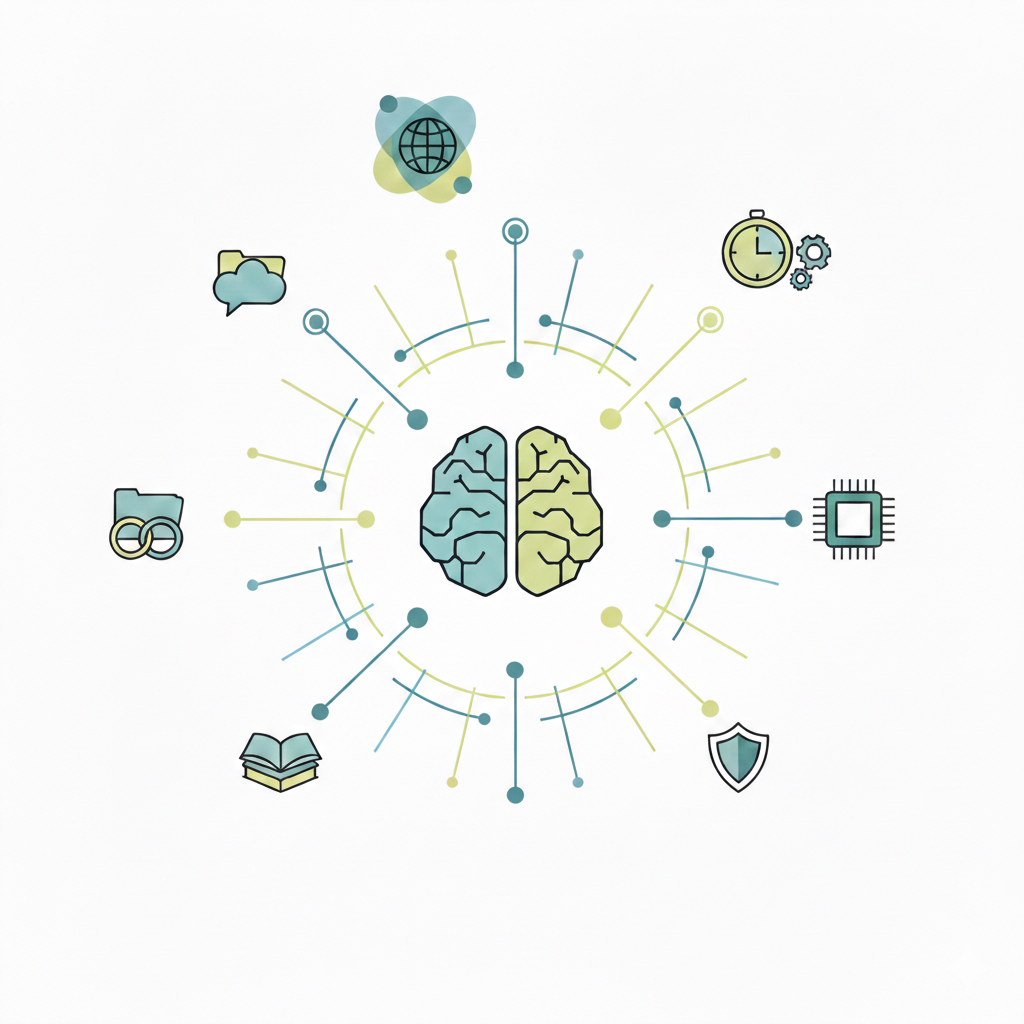
Over the last 20 years, starting with initiatives such as the Dublin Core Metadata Initiative (DCMI) or industry requirements (such as those of major search engines), specific metadata models have been developed for educational resources.
Two main approaches have been used: the first is “education-based” and the second is “search engine-based.” The initiatives arising from the two approaches have ended up influencing each other over time.
Specific standards for educational resources introduce data on their specific characteristics and relationships, such as the prerequisites required to take a certain course, or the level of preparation that the resource aims to achieve in that subject, and so on.
With this in mind, we would like to point out to authors some practical measures to take when uploading their educational resources to a repository in order to improve their discoverability:
- Enter metadata that is as complete and detailed as possible, using AI if necessary.
Artificial intelligence tools are capable of extracting key data with often satisfactory results, although these should be reviewed. Improved or more relevant output can be obtained by specifying the reference metadata standard to the tool. - If permitted by the platform, provide metadata not only in the language of the document, but also in another internationally recognized language, either in general or in your field of study.
- Carefully choose keywords that describe the resource and, if possible, avoid using overly specific vocabulary.
- Ensure that the metadata describing the resource includes information about the license.
It is not sufficient for this to be explicitly stated in the document; it must also be declared in the form of metadata so that search engines can apply the relevant filter.
Please note that the recommended licenses for open educational resources within the Creative Commons project are CC BY and CC BY SA.
Take care of updates
The invitation is not to abandon your resource, but to take care of updating content, links, and formats. A resource with outdated content will be less likely to respond to user search queries, for example. A resource with broken links is more difficult for users to interpret and use, and they may feel discouraged and consider it an “outdated” resource, thus inhibiting the natural process of word of mouth. Finally, a disused file format could render the resource unusable, even if the end user is very interested in it. Similarly, it will be essential to check that the links pointing to the resource, inserted by the author in contexts other than those of the repository (e.g., syllabi, etc.), are still correct and working. In this sense, as we said, the DOI offers a guarantee of persistence and retrievability.
In conclusion
Unique identifiers, metadata, open licenses, updated data, and links are not only useful for web retrieval or selection by the end user.
They also allow retrieval systems to work to their full potential, drawing on pools of content in which the various elements also carry “meaning” (semantic web).
Working on discoverability is not an ancillary exercise, but an essential component of creating open educational resources: an act of care towards one’s users, which increases the quality of the content itself.
This article is part of the series “Sharing is a challenge”, published throughout March 2026, in collaboration with the UNESCO RELIA Chair and the Euniwell Network.
Newsletter. To receive the upcoming articles from this series by mail, subscribe to our newsletter.
The original artistic intention remains that of the artist and can be different from the editorial intention of our remix. We thank Joshua Rush for sharing his work under an open licence CC BY-NC-SA 4.0.

“
How Authors Can Make Their OERs “Discoverable”
” by Benedetta Calonaci and Alessandra Gammino is licensed under CC BY 4.0